Contact Us
Table of contents
Introduction
Every IT leader eventually confronts the same uncomfortable reality: somewhere in their organisation, assets are being purchased that already exist in storage. Software licenses are being renewed that no one is using. Devices are sitting idle in departments that have no record of them. And the audit season is three weeks away.
These are not edge case problems. They are the predictable outcome of managing IT infrastructure without a purpose-built ITAM system. Organizations that rely on spreadsheets or disconnected ticketing tools consistently face inflated costs, compliance exposure, and an incomplete picture of their own technology estate.
Choosing the right IT asset management software is one of the most commercially impactful decisions an IT operations or procurement team can make. But not all ITAM platforms are built the same. The features that matter at a 50-person company are fundamentally different from what an enterprise with 10,000 endpoints needs. And somewhere between the vendor demo and the deployment, critical capability gaps are discovered, usually at the worst possible time.
This guide breaks down the essential IT asset management features that every organization should evaluate before committing to a platform, from core ITAM functionality and hardware lifecycle tracking to license compliance, automated discovery, and enterprise-grade integrations.
Core ITAM Functionality: The Non-Negotiables
Before evaluating advanced capabilities, any serious ITAM software evaluation must begin with core ITAM system capabilities that are simply expected in a modern platform. If a tool cannot nail these, the more sophisticated features are irrelevant.
Centralized Asset Repository: Every ITAM platform must serve as a single source of truth for all IT assets, hardware, software, cloud resources, and peripherals. This means structured asset records with consistent data fields: device type, serial number, manufacturer, model, assigned user, department, physical location, and current status. Without this foundation, reporting becomes unreliable, and inventory decisions are made on incomplete data.
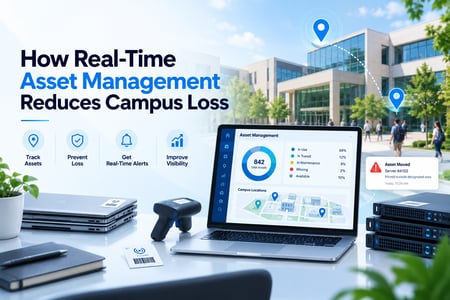
Real-Time IT Asset Tracking: The ability to know where an asset is, who has it, and its condition at any given moment, is a fundamental requirement. Static records updated once a quarter are not asset management. They are historical documentation. An effective ITAM system maintains live, continuously updated records through automated data feeds, network scanning, or RFID and barcode integration.
Asset Vue's IT asset management platform delivers real-time IT asset visibility across your entire inventory, giving IT teams the live operational picture they need to make fast, accurate decisions.
Role-Based Access and Audit Trails: Every interaction with an asset record assignment, transfer, modification, or disposal must be logged with a timestamp and user identity. This is not optional in regulated industries. It is the evidentiary backbone of any compliance framework, from SOX and HIPAA to FISMA and GDPR.
Customizable Dashboards and Reporting: IT operations teams, finance departments, and compliance officers need different views of the same data. The best IT inventory management software features include configurable dashboards that let each stakeholder surface the metrics they care about, utilization rates, warranty expiry, software deployment ratios, and cost per department, without requiring a developer to build custom reports every quarter.
.png?width=1536&height=1024&name=Must%20Have%20Features%20in%20IT%20Asset%20Management%20Software%20Asset%20Vue%20(3).png)
IT Asset Lifecycle Management: Tracking Every Stage
One of the most decisive differentiators between average and best-in-class ITAM platforms is the depth of hardware lifecycle tracking capability. An asset does not begin its life when it is assigned to an employee. It begins at procurement, and it does not end until the device is securely disposed of.
Asset Procurement Tracking: Strong ITAM software captures the full procurement story: purchase order reference, vendor name, acquisition cost, delivery date, and initial assignment. This procurement data flows directly into depreciation calculations, budget forecasting, and vendor contract analysis. Without procurement tracking, the financial picture of your asset estate is permanently incomplete.
Deployment and Assignment Management: Every assignment event that received the asset, when, in what department, under what approval, should be logged automatically. ITAM platforms with strong IT asset lifecycle management enable self-service request workflows, manager approval routing, and auto-notification on assignment, reducing the administrative burden on IT helpdesk teams.
Maintenance and Warranty Tracking: Assets that miss scheduled maintenance create operational risk and potential compliance violations. Your ITAM platform should automatically flag assets approaching maintenance cycles, warranty expiry dates, or end-of-support milestones. Proactive alerts prevent the costly scenario of discovering a device is out of warranty only after it fails in a production environment.
End-of-Life and Disposal Documentation: Decommissioning an asset without proper documentation creates both data security risk and regulatory liability. ITAM software should provide structured disposal workflows that record data destruction confirmation, WEEE compliance, physical disposal method, and asset retirement date, creating a defensible audit record for every device removed from the estate.
Asset Vue's real-time IT asset inventory management platform tracks the full hardware lifecycle from acquisition to retirement, giving IT and finance teams complete visibility at every stage.
Why Automated Discovery Is Critical for ITAM
Manual asset audits are slow, expensive, and structurally inaccurate. By the time an audit team finishes scanning one floor, the data from the first floor is already stale. This is why automated discovery is not a premium add-on in modern ITAM software; it is a core requirement.
Automated discovery continuously scans your network to identify every connected device, including laptops, servers, printers, switches, virtual machines, and cloud instances, without any manual intervention. Devices that were never formally registered, brought in by employees, or provisioned outside standard IT channels are surfaced automatically. Shadow IT stops being an invisible threat and becomes a visible, manageable data point.
Why automated discovery is important for ITAM becomes immediately clear in a security context. You cannot protect assets you do not know you have. Every untracked device is a potential attack surface, unpatched, unmonitored, and unaccounted for in your risk register. Organizations with mature automated discovery capabilities consistently detect security incidents faster than those relying on periodic manual audits.
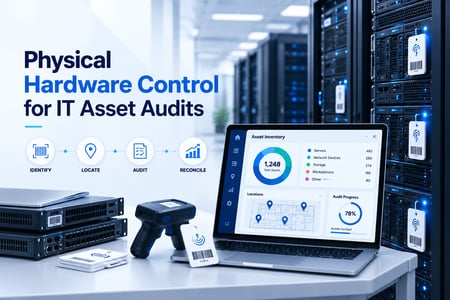
For hardware-heavy environments where network-based discovery has limitations, RFID-based asset tracking fills the gap. RFID readers can identify and log physical assets even when they are powered off or disconnected from the network, extending discovery coverage to the physical layer that traditional software scanning cannot reach.
ITAM Software Features for License Compliance
Software vendor audits are expensive, disruptive, and increasingly frequent. ITAM software features for license compliance exist specifically to eliminate the financial and legal exposure that comes from managing software entitlements manually.
License Entitlement vs. Deployment Tracking: Your ITAM platform must provide a clear, real-time comparison between the number of licenses your organization holds and the number currently deployed. Over-licensing wastes the budget. Under-licensing creates audit liability. The ideal state is continuous optimization, and it requires automated tracking at the deployment level, not just at the purchase level.
Software Usage Monitoring: Purchasing a license does not mean the software is being used. ITAM platforms with software usage monitoring identify applications that have not been launched in 30, 60, or 90 days flagging them for license reclamation before renewal. Organizations that implement usage-based license management typically identify 15–30% of their software spend as reclaimable or eliminable.
Vendor Contract and Renewal Management: License agreements come with expiry dates, volume commitments, and compliance clauses. ITAM software should track every vendor contract, alert the procurement team ahead of renewal windows, and surface the usage data needed to negotiate from a position of strength rather than accepting auto-renewal terms that no longer reflect actual consumption.
Compliance Reporting for Audits: When a vendor audit notice arrives, the organization with a well-configured ITAM platform can generate a complete license compliance report in minutes. The organization without one spends weeks assembling data from disconnected sources and still cannot be certain the report is accurate.
Enterprise vs. Small Business: Matching Features to Scale
The best features for enterprise ITAM software and the must-have features for small business ITAM share a common foundation but diverge sharply on scale, complexity, and integration depth.
For small and mid-market organizations, the priority features are practical and immediate: a clean asset register, barcode or RFID scanning for physical audits, basic lifecycle tracking, software license monitoring, and a mobile-accessible interface for IT staff in the field. The platform should be deployable quickly, require minimal configuration overhead, and deliver visible ROI within the first quarter.
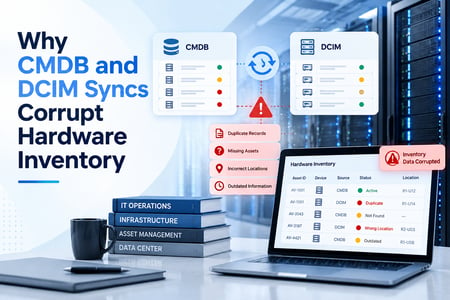
For enterprise organizations managing thousands of endpoints across multiple locations, geographies, and cloud environments, the requirements are fundamentally different. Enterprise ITAM platforms must support multi-site asset tracking, role-based access across departments, API-level integration with ITSM, ERP, HR, and procurement systems, CMDB synchronization, and advanced analytics that inform capital planning decisions at a strategic level.
The hidden cost of choosing the wrong tier is significant. An enterprise buying an SMB-grade tool ends up rebuilding manual processes to compensate for feature gaps. An SMB buying an over-engineered enterprise platform ends up paying for capabilities it will never use while struggling with an implementation that was designed for a team three times its size.
Understanding how ITAM integration delivers value across enterprise functions is explored in depth in Asset Vue's blog: The Value of Integrating IT Asset Management Throughout the Enterprise.
Integration Capabilities: ITAM Does Not Work in Isolation
An ITAM platform that cannot share data with the rest of your IT stack creates a new silo rather than eliminating existing ones. Integration capabilities are a defining feature of enterprise-grade ITAM software, not an optional configuration.
At a minimum, your ITAM system should offer native or API-based integration with your ITSM platform for incident and change management, your HR system for automatic onboarding and offboarding asset workflows, your financial system for depreciation and cost center reporting, and your procurement platform for purchase order matching and delivery confirmation.
Organizations that achieve this integration layer eliminate the most common ITAM failure mode: data that is accurate in the ITAM system but inconsistent everywhere else. Integrated ITAM becomes the authoritative data source that other systems trust, which means fewer reconciliation cycles, fewer audit discrepancies, and faster operational decisions across the board.
Contract Management in ITAM Software
A frequently overlooked but commercially critical feature within any ITAM platform is contract management. IT contracts, hardware warranties, software license agreements, vendor SLAs, and maintenance contracts have financial implications that extend years beyond the initial purchase decision.
ITAM software with built-in contract management tracks every agreement associated with an asset: the vendor name, contract value, start and expiry date, renewal terms, and associated assets covered. Alerts fire automatically ahead of renewal windows, giving procurement and IT leadership sufficient time to evaluate utilization data, negotiate terms, or run competitive alternatives.
Without contract management inside the ITAM system, renewal decisions get made on incomplete information. Contracts auto-renew at legacy rates. Assets covered by expired warranties generate unexpected repair costs. And compliance frameworks built on contractual obligations have gaps that only surface during audits.
Choosing the Right ITAM Platform for Your Organization
The ITAM software market is crowded, and feature lists across vendors look similar at first glance. The real differentiators emerge when you map platform capabilities against your specific operational environment, the number of assets you manage, the industries you operate in, the compliance frameworks you answer to, and the IT systems you need to connect.
Asset Vue's IT asset management solution is purpose-built for organizations that need real-time hardware visibility, RFID-enabled physical tracking, full lifecycle management, and enterprise-grade integra
tion without the implementation complexity or cost overhead of legacy enterprise platforms.
If your organization is evaluating ITAM software or looking to replace a tool that no longer scales with your infrastructure, the most effective starting point is a structured asset audit paired with a clear feature requirements matrix. Book a demo with Asset Vue to see how real-time IT asset tracking maps to your specific operational requirements.


 FAQ
FAQ
Frequently Asked Questions
What is the most important feature in ITAM software?
The single most important feature in any ITAM platform is a centralized, continuously updated asset repository, the real-time single source of truth for every asset in your environment. Without accurate, current inventory data, every other ITAM capability, including lifecycle tracking, license compliance, reporting, and integration, operates on a flawed foundation. Automated discovery is the mechanism that keeps this repository current without relying on manual data entry, making it the most operationally critical technical feature within a well-functioning ITAM system.
Does ITAM software include contract management?
Yes, most enterprise-grade ITAM platforms include contract management as either a built-in module or an integrated component. Contract management within ITAM covers hardware warranties, software license agreements, vendor SLAs, and maintenance contracts, tracking expiry dates, renewal windows, coverage terms, and associated assets in one place. This capability is particularly valuable for organizations managing large vendor portfolios, because it allows procurement and IT teams to make renewal and replacement decisions based on actual usage and cost data rather than guesswork. Platforms that do not include native contract management typically support integration with dedicated contract lifecycle management tools to fill that gap.