Contact Us
Table of contents
Introduction
As organizations upgrade laptops, servers, mobile devices, and other IT equipment, managing outdated technology becomes a growing challenge. Simply storing retired devices or disposing of them improperly can create data security risks, compliance issues, and unnecessary electronic waste.
This is where IT Asset Disposition (ITAD) comes in. ITAD provides a structured approach to retiring, reusing, recycling, or disposing of end-of-life IT assets while protecting sensitive data and meeting environmental regulations.
Asset Vue helps organizations maintain accurate asset records throughout the entire lifecycle, making end-of-life asset retirement, tracking, and compliance management significantly easier.
Quick AnswerIT Asset Disposition (ITAD) is the process of securely managing retired or obsolete IT equipment throughout its end-of-life stage. It involves data destruction, asset tracking, refurbishment, resale, recycling, and environmentally responsible disposal of devices such as laptops, desktops, servers, storage drives, and networking equipment. The primary goals of ITAD are to protect sensitive data, ensure regulatory compliance, reduce electronic waste, and recover value from retired assets. Organizations often work with certified ITAD vendors to ensure that equipment is handled securely and responsibly throughout the disposition process. |
Why Is ITAD Important?
IT Asset Disposition is more than simply getting rid of old computers or servers. As organizations generate and store increasing amounts of sensitive data, the way retired IT assets are handled can have significant implications for security, compliance, sustainability, and operational costs.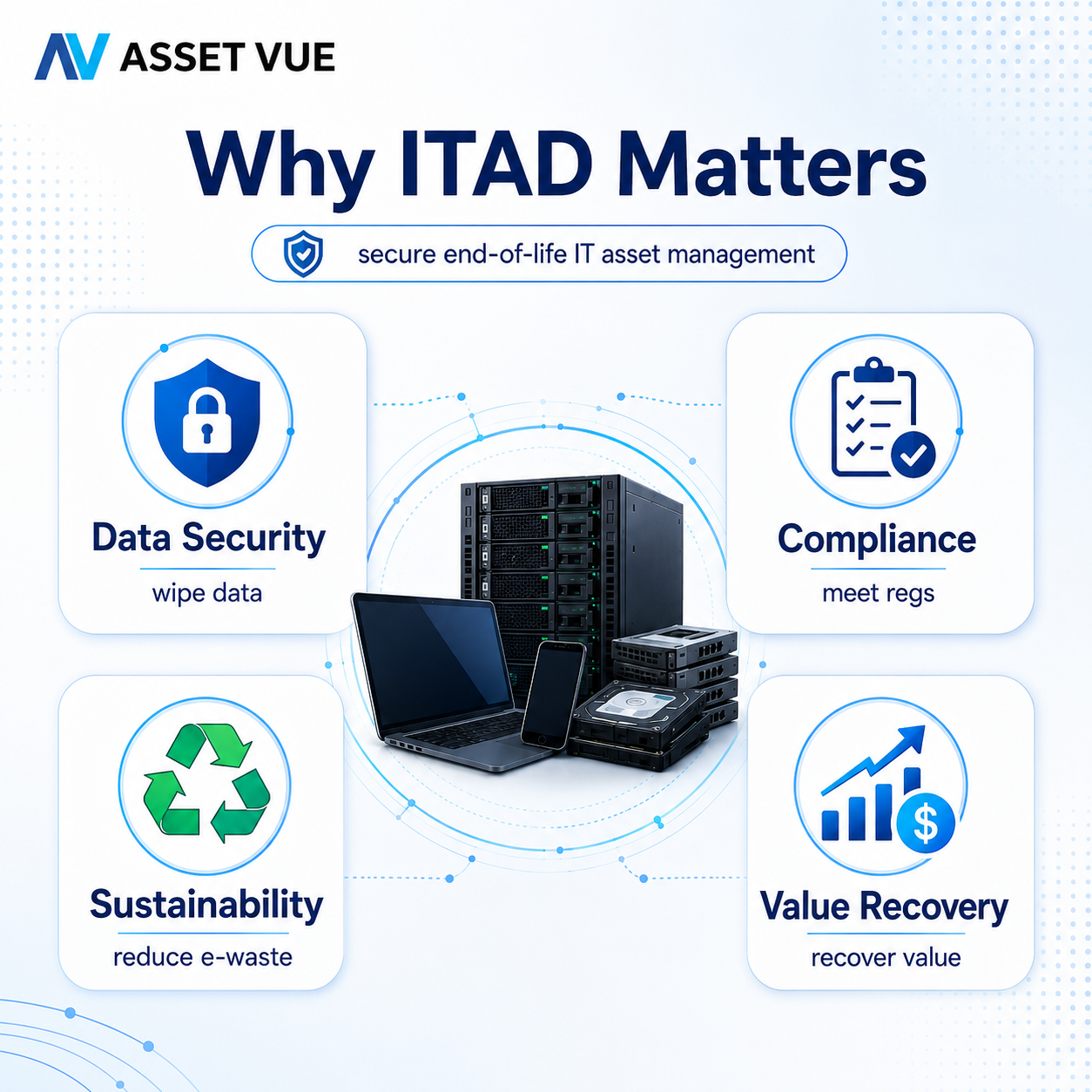
Data Security and Compliance
One of the primary reasons organizations invest in ITAD services is to prevent data breaches. Retired devices often contain confidential business information, customer records, employee data, financial documents, and intellectual property. Simply deleting files or formatting a hard drive does not guarantee that data cannot be recovered.
A proper ITAD process uses secure data destruction methods such as data wiping, degaussing, or physical destruction to ensure sensitive information is permanently removed. This helps organizations comply with data protection regulations such as GDPR, HIPAA, CCPA, and PCI DSS while reducing the risk of costly security incidents.
Environmental Responsibility
Electronic waste continues to be a growing global concern. IT equipment contains materials that can be harmful to the environment if disposed of improperly. Through responsible recycling and refurbishment programs, ITAD helps keep electronic waste out of landfills and supports sustainability initiatives.
Whenever possible, functional devices are refurbished and reused, extending their useful life and reducing the demand for new hardware. Assets that can no longer be used are recycled according to environmental regulations, ensuring valuable materials are recovered safely.
Financial Value Recovery
Many organizations overlook the residual value of retired IT assets. Equipment that is no longer needed by one business may still have value in secondary markets.
As part of the ITAD process, eligible devices can be refurbished, remarketed, or resold to recover a portion of their original investment. This not only offsets technology replacement costs but also transforms asset disposal from a cost center into a potential source of value recovery.
What Is the ITAD Process?
The ITAD process follows a structured approach to ensure retired IT assets are handled securely, compliantly, and responsibly.
Maintaining accurate asset records before disposition is critical. Solutions like Asset Vue help organizations track asset ownership, location, status, and lifecycle history, ensuring assets entering the ITAD process are properly identified and documented.
While the exact workflow may vary between organizations, most ITAD programs include the following stages:
Asset Inventory and Assessment
The process begins with identifying and cataloging assets that are ready for retirement. Organizations assess the condition, age, functionality, and potential resale value of each asset to determine the most appropriate disposition method.
This step also helps maintain accurate records and ensures no devices are overlooked during the retirement process.
Secure Collection and Chain of Custody
Once assets are identified, they are securely collected and transported for processing. Maintaining a documented chain of custody is critical because it provides visibility into where assets are located and who has handled them at every stage.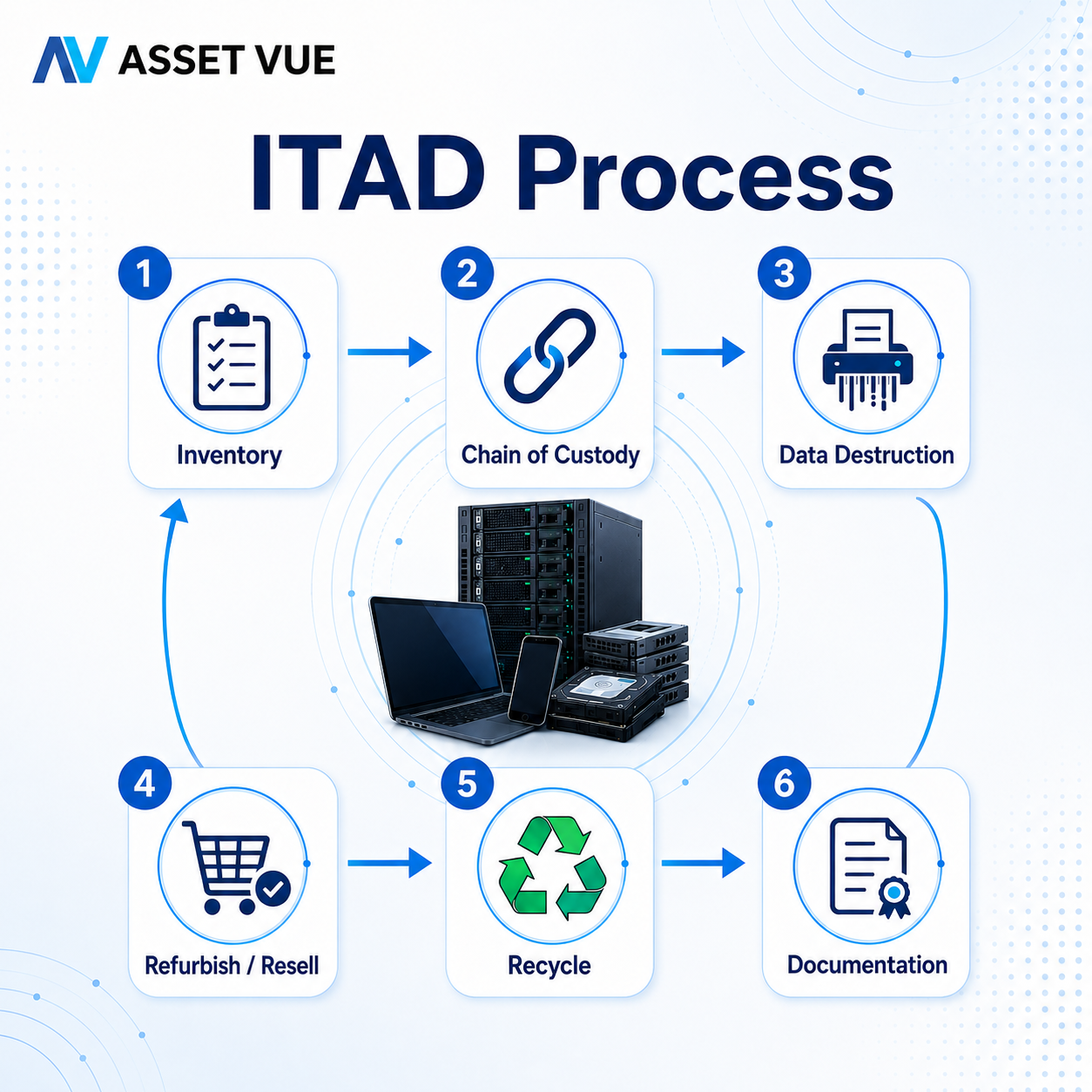
A secure chain of custody helps prevent equipment loss, theft, or unauthorized access to sensitive information.
Data Sanitization and Destruction
Before any asset is reused, resold, or recycled, all stored data must be permanently removed. This is one of the most important stages of the ITAD process.
Common data destruction methods include:
- Data Wiping: Securely overwriting existing data according to recognized standards such as NIST SP 800-88.
- Degaussing: Using strong magnetic fields to destroy data stored on magnetic media.
- Physical Destruction: Shredding, crushing, or dismantling storage devices when data cannot be securely erased.
The chosen method depends on the asset type, security requirements, and regulatory obligations.
Refurbishment and Value Recovery
Not all retired equipment has reached the end of its useful life. Devices that remain functional may be repaired, upgraded, cleaned, and prepared for resale or redeployment.
This allows organizations to recover value from retired assets while reducing electronic waste and extending the lifecycle of existing equipment.
Recycling and Responsible Disposal
Assets that cannot be reused or resold are sent for certified recycling. During this stage, components such as metals, plastics, and electronic materials are separated and processed for reuse.
Responsible recycling helps organizations meet environmental requirements while preventing hazardous materials from ending up in landfills.
Documentation and Reporting
The final stage involves generating documentation that verifies the disposition process was completed correctly. This may include asset reports, audit trails, and Certificates of Destruction (CoD).
These records provide proof of compliance, support internal audits, and demonstrate that sensitive data and equipment were handled according to established policies and regulations.
ITAM vs ITAD: What's the Difference?
Although IT Asset Management (ITAM) and IT Asset Disposition (ITAD) are closely related, they serve different purposes within the IT asset lifecycle.
ITAM focuses on managing IT assets from procurement through daily use, while ITAD deals with the secure retirement and disposal of those assets at the end of their lifecycle. Together, they help organizations maximize asset value, maintain compliance, and reduce operational risks.
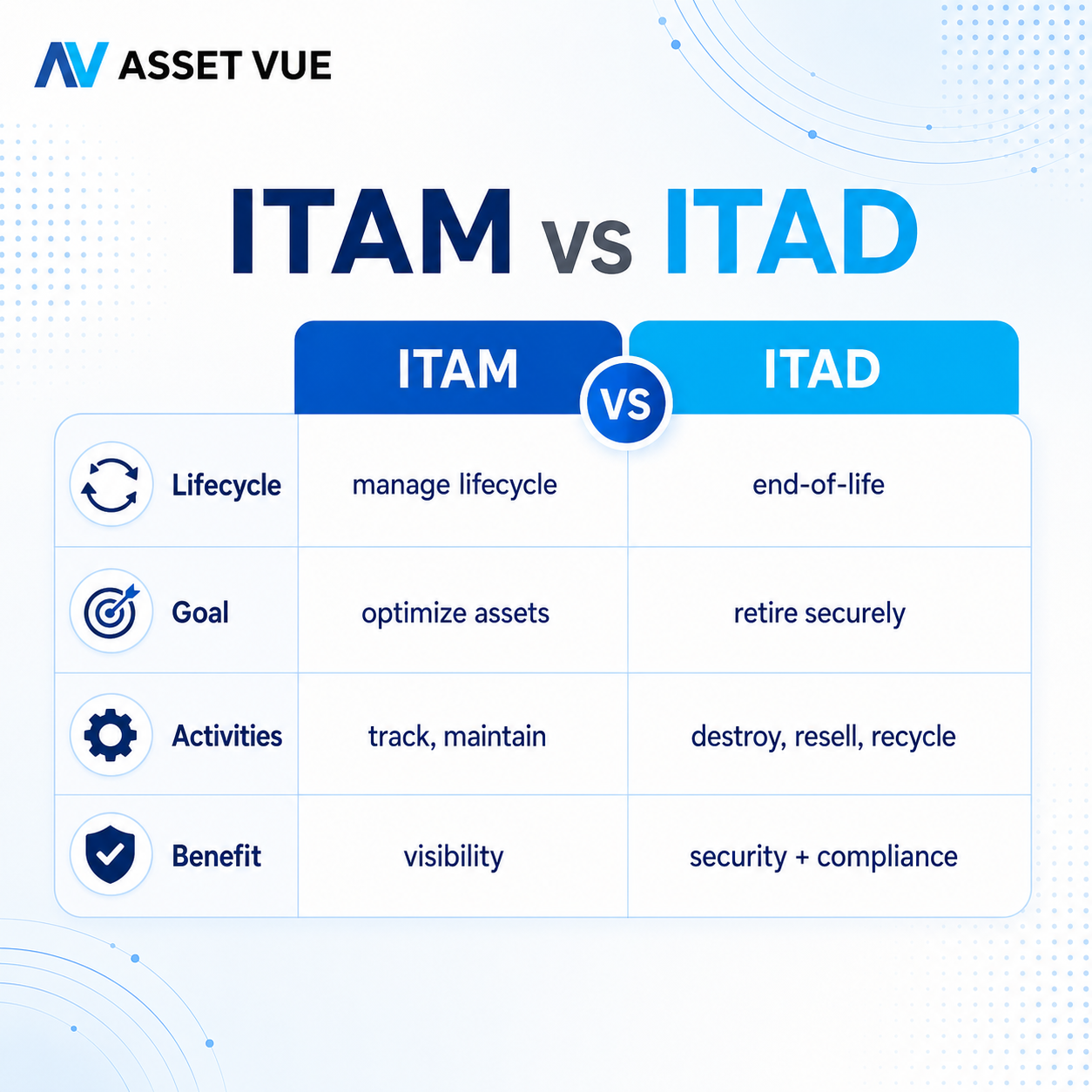
In simple terms, ITAM helps organizations understand what assets they own, where those assets are located, and how they are being used throughout their lifecycle. ITAD takes over when those assets are no longer needed and ensures they are disposed of securely and responsibly.
For example, an organization may use an ITAM system to track a company laptop throughout its operational life. When the laptop reaches the end of its useful life, the ITAD process ensures that all data is destroyed, any remaining value is recovered through resale or refurbishment, and the device is recycled in compliance with environmental regulations.
Rather than viewing ITAM and ITAD as separate processes, organizations should treat them as complementary components of a complete asset lifecycle strategy. Effective ITAM provides accurate asset records that simplify disposition activities, while a strong ITAD program ensures retired assets do not become security, compliance, or environmental liabilities.
How to Choose Certified ITAD Vendors
Selecting the right ITAD vendor is critical to ensuring data security, regulatory compliance, and responsible asset disposal. While many companies offer electronics recycling services, not all providers follow the strict standards required for secure IT asset disposition.
When evaluating ITAD companies, consider the following factors:
Industry Certifications
A reputable ITAD provider should hold recognized certifications that demonstrate compliance with security and environmental standards. Look for certifications such as:
- R2v3 (Responsible Recycling): Verifies responsible electronics recycling practices.
- e-Stewards: Confirms ethical handling of electronic waste.
- ISO 9001: Demonstrates adherence to quality management standards.
- ISO 14001: Indicates compliance with environmental management practices.
Secure Data Destruction
Data security should be a top priority when choosing an ITAD vendor. Ensure the provider offers secure data sanitization methods such as data wiping, degaussing, or physical destruction, and follows recognized standards like NIST SP 800-88.
Chain of Custody Procedures
A reliable ITAD provider should maintain a documented chain of custody throughout the disposition process. This ensures assets remain secure from collection through final processing and provides accountability at every stage.
Documentation and Reporting
Certified ITAD vendors should provide detailed reporting, including audit trails and Certificates of Destruction (CoD). These documents serve as proof that assets and data were disposed of according to regulatory and organizational requirements.
Asset Recovery Services
Many ITAD services include refurbishment and remarketing programs that help organizations recover value from retired hardware. Vendors that offer transparent asset recovery processes can help offset technology replacement costs while supporting sustainability initiatives.
By choosing a certified ITAD vendor with proven security, compliance, and recycling practices, organizations can reduce risk and ensure retired IT assets are managed responsibly.
How to Implement an ITAD Policy
A well-defined ITAD policy helps organizations establish consistent procedures for managing retired IT assets while minimizing security, compliance, and environmental risks. Rather than handling asset disposal on a case-by-case basis, businesses should develop a formal framework that outlines how end-of-life equipment will be processed.
1. Create Clear Asset Disposal Guidelines
Start by defining which assets fall under the ITAD program, including laptops, desktops, servers, storage devices, networking equipment, and mobile devices. The policy should specify when assets qualify for retirement and the approved disposition methods for each asset type.
2. Establish Data Destruction Requirements
Data security should be a core component of every ITAD policy. Organizations should define approved sanitization methods, applicable regulatory requirements, and documentation standards for data destruction activities.
Using recognized standards such as NIST SP 800-88 helps ensure consistency and compliance throughout the process.
3. Assign Roles and Responsibilities
Clearly identify who is responsible for approving asset retirement, coordinating vendor activities, maintaining records, and verifying compliance. Defined ownership helps prevent gaps in accountability and improves policy enforcement.
4. Select Certified ITAD Vendors
Partnering with certified ITAD vendors can simplify implementation and ensure retired assets are handled according to industry standards. Vendors should meet the organization's security, compliance, and sustainability requirements while providing detailed reporting and audit documentation.
5. Maintain Documentation and Audit Trails
Every disposition activity should be documented. Maintaining records such as asset inventories, chain-of-custody logs, and Certificates of Destruction helps support audits and demonstrates compliance with internal policies and regulatory requirements.
6. Review and Update the Policy Regularly
Technology, regulations, and security threats continue to evolve. Organizations should periodically review their ITAD policy to ensure it remains aligned with current business needs, compliance requirements, and industry best practices.
Best Practices for IT Asset Disposition
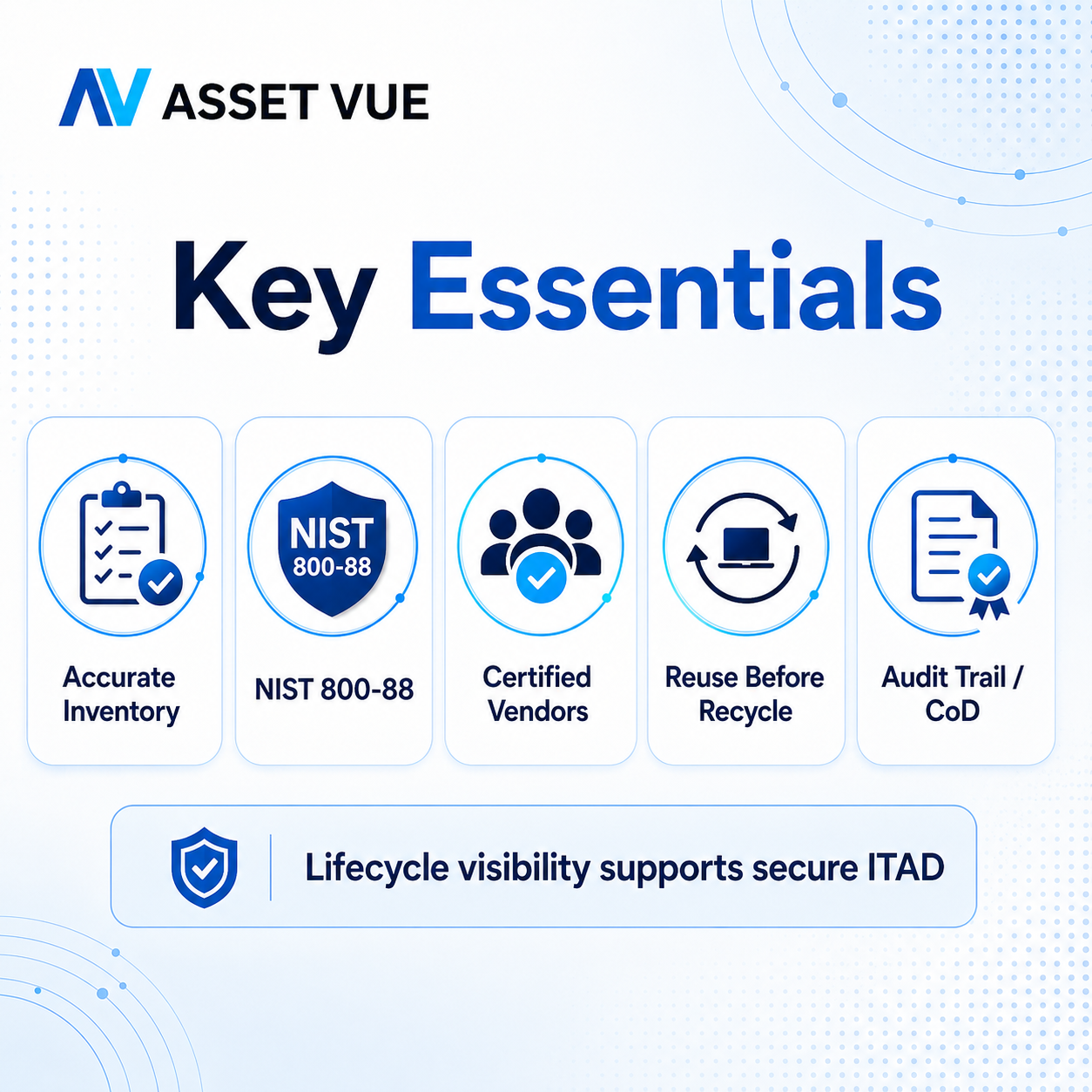
An effective ITAD program goes beyond simply retiring outdated hardware. Organizations should follow established best practices to improve security, maintain compliance, and maximize the value of retired assets.
Maintain an Accurate Asset Inventory
Organizations should keep detailed records of all IT assets throughout their lifecycle. Accurate inventory data makes it easier to identify assets approaching retirement and ensures no devices are overlooked during the disposition process.
Asset tracking platforms like Asset Vue help organizations maintain real-time inventory visibility, reducing the risk of missing assets during disposition activities and improving audit readiness.
Follow Recognized Data Destruction Standards
Data should be sanitized using approved methods that align with industry standards such as NIST SP 800-88. Organizations should also verify that data destruction activities are documented and auditable.
Verify Vendor Certifications
Before working with an ITAD provider, confirm that the vendor holds relevant certifications such as R2v3, e-Stewards, ISO 9001, or ISO 14001. These certifications demonstrate adherence to recognized security and environmental practices.
Prioritize Reuse Before Recycling
Whenever possible, organizations should refurbish and redeploy assets or recover value through resale programs. Extending the useful life of equipment supports sustainability initiatives while reducing disposal costs.
Maintain a Secure Chain of Custody
Tracking assets from collection through final disposition helps prevent loss, theft, or unauthorized access. A documented chain of custody also provides valuable evidence for compliance and audit purposes.
Conduct Regular Reviews
ITAD policies and procedures should be reviewed periodically to ensure they remain aligned with evolving regulations, security requirements, and organizational goals. Regular assessments can help identify process improvements and reduce potential risks.
Conclusion
IT Asset Disposition (ITAD) is a critical part of the IT asset lifecycle that helps organizations securely manage retired technology assets. By combining secure data destruction, responsible recycling, regulatory compliance, and value recovery strategies, businesses can reduce risk while maximizing the return on their technology investments.
Effective ITAD starts with accurate asset visibility. By combining a strong IT Asset Management strategy with secure disposition processes, organizations can reduce risk, improve compliance, and maximize asset value. Asset Vue helps organizations maintain complete lifecycle visibility, making IT asset retirement and disposition more efficient, secure, and manageable.


 FAQ
FAQ
Frequently Asked Questions
1. What does ITAD stand for?
ITAD stands for IT Asset Disposition. It refers to the process of securely retiring, recycling, reselling, or disposing of end-of-life IT assets while ensuring data security and regulatory compliance.
2.Why is ITAD important for data security?
Retired IT equipment often contains sensitive business and customer information. ITAD helps prevent data breaches by ensuring data is permanently removed through secure sanitization or destruction methods.
3.How does ITAD help with sustainability?
ITAD supports sustainability by extending the life of IT equipment through refurbishment and reuse while ensuring obsolete assets are recycled responsibly instead of ending up in landfills.
4.What is IT Asset Management (ITAM)?
IT Asset Management (ITAM) focuses on managing IT assets throughout their operational lifecycle, while IT Asset Disposition (ITAD) focuses on securely retiring and disposing of those assets at the end of their lifecycle.