Contact Us
Table of contents
Introduction
Modern organizations rely heavily on technology to run daily operations.
From laptops and servers to cloud platforms, software licenses, and mobile devices, businesses manage large numbers of IT assets across offices, data centers, warehouses, and remote work environments. As IT infrastructures continue growing, keeping track of these assets becomes more difficult without a structured management process.
Today, many companies use IT asset management solutions, RFID tracking, inventory management systems, and enterprise asset tracking software to improve asset visibility and maintain more accurate IT records.
As organizations continue managing larger and more distributed technology environments, information technology asset management has become essential for improving security, reducing costs, supporting compliance, and maintaining operational control.
Let’s understand how IT asset management works and why it matters for modern businesses.
What Is IT Asset Management (ITAM)?
IT asset management, commonly known as ITAM, is the process of managing IT assets throughout their entire lifecycle.
If you are wondering what ITAM stands for, it stands for Information Technology Asset Management.
ITAM helps organizations track, monitor, maintain, and optimize technology assets from procurement to retirement.
These assets can include:
- laptops
- servers
- networking equipment
- mobile devices
- cloud resources
- software licenses
- monitors
- storage systems
- and other technology infrastructure.
The goal of ITAM asset management is to help organizations maintain full visibility and control over their IT environment.
Instead of only tracking inventory, ITAM focuses on:
- asset ownership
- lifecycle status
- maintenance history
- software compliance
- usage tracking
- security monitoring
- and operational performance.
For example, an organization can use ITAM solutions to:
- track which employee is assigned a laptop
- monitor warranty status
- identify outdated hardware
- manage software licenses
- and schedule device replacements before failures occur.
Asset Vue helps enterprises automate RFID asset tracking, server inventory management, and real-time IT asset visibility across distributed environments.
- RFID asset tracking
- barcode scanning
- inventory automation
- and centralized reporting systems.
As IT environments become more complex, organizations increasingly rely on information technology asset management systems to maintain accurate records, reduce operational risks, and improve long-term technology planning.
ITAM is no longer only an IT inventory tool. It has become an important part of cybersecurity, compliance management, operational visibility, and overall IT governance.
Why IT Asset Management Matters for Enterprises
As organizations grow, managing IT assets becomes much more complex.
Businesses often operate across:
- multiple offices
- remote work environments
- data centers
- warehouses
- and cloud infrastructures.
Without proper visibility into technology assets, organizations can quickly lose control over their IT environment.
This is one reason why IT asset management has become essential for enterprises.
ITAM helps businesses maintain accurate records of:
- what assets they own
- where those assets are located
- who is using them
- and the current status of each device or software asset.
This visibility is critical for both operational and security purposes.
One of the biggest reasons why IT asset management is important is cost control.
Without proper tracking, organizations may:
- purchase duplicate hardware
- pay for unused software licenses
- replace devices too early
- or continue maintaining outdated systems unnecessarily.
An organized ITAM program helps businesses optimize technology spending by improving visibility into asset usage, maintenance history, and lifecycle status.
IT asset security is another major reason enterprises invest in ITAM solutions.
Unmanaged or unknown devices can create cybersecurity risks because IT teams may not know certain assets exist within the environment.
If devices are not properly monitored, patched, or updated, they can become vulnerabilities that expose the organization to security threats.
IT asset management helps organizations
- monitor active devices
- maintain software compliance
- track updates
- and identify unauthorized assets connected to the network.
This becomes especially important in remote and hybrid work environments where employees use devices across multiple locations.
ITAM also improves audit readiness and compliance management.
Many industries must maintain accurate records related to:
- hardware ownership
- software licensing
- maintenance history
- and disposal activity.
Without centralized tracking, preparing for audits can become time-consuming and difficult.
Modern IT asset management solutions help enterprises automate reporting and maintain audit-ready asset records in real time.
As organizations continue managing larger and more distributed IT environments, ITAM becomes critical for maintaining visibility, improving security, reducing costs, and supporting long-term technology planning.
Key Components of IT Asset Management
IT asset management includes several areas that work together to help organizations manage technology assets more effectively.
While different organizations may structure ITAM differently, most ITAM programs include a few core components that support asset visibility, lifecycle tracking, security, and operational control.
Understanding these components helps businesses build a stronger and more organized IT asset management strategy.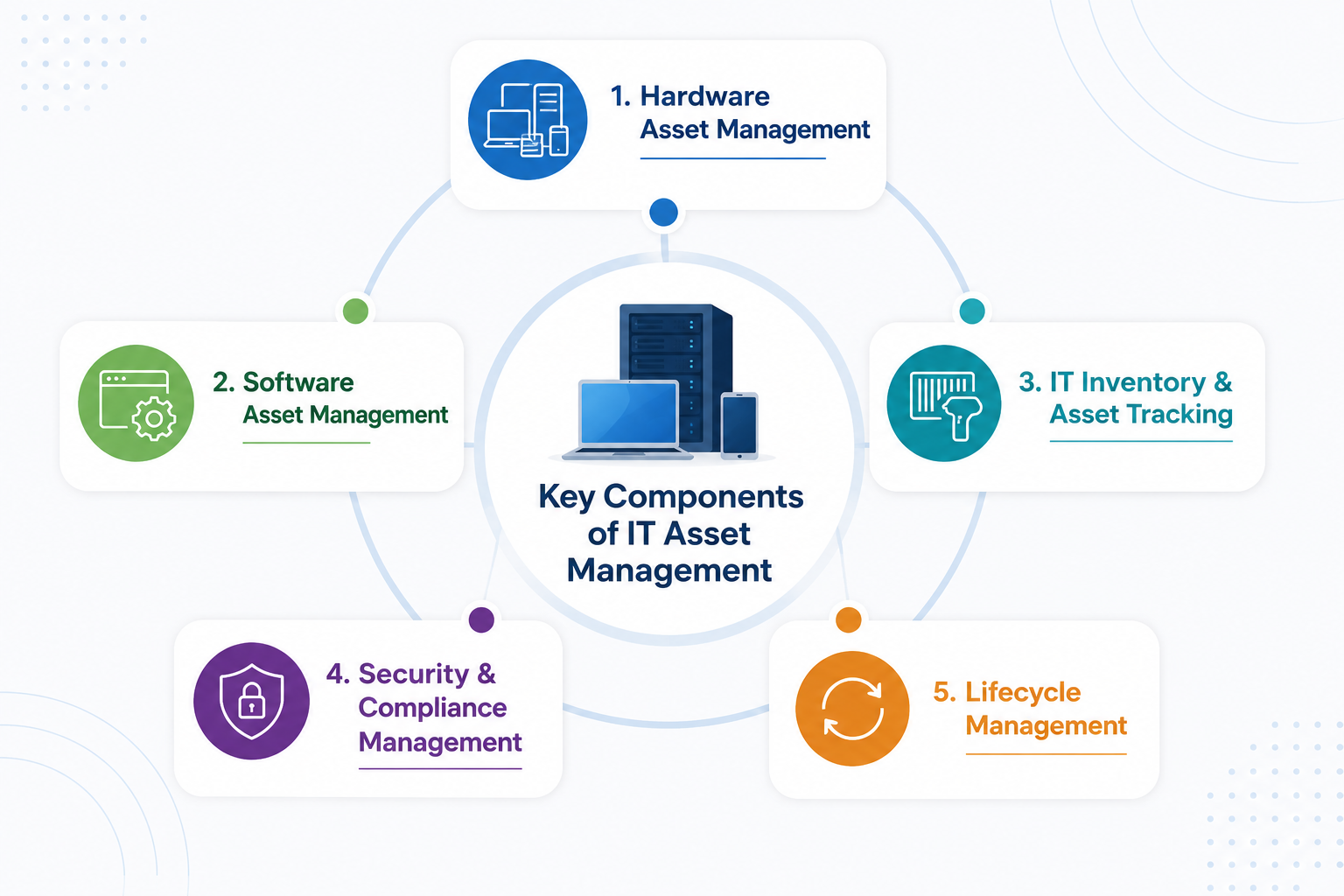
Hardware Asset Management
Hardware asset management focuses on physical IT equipment used across the organization.
This includes assets such as:
- laptops
- servers
- networking devices
- monitors
- scanners
- storage systems
- and mobile devices.
Organizations use hardware asset management to:
- track ownership
- monitor hardware condition
- manage maintenance
- schedule upgrades
- and maintain accurate inventory records.
For enterprise IT teams and data centers, server asset management is especially important because infrastructure visibility directly affects operational reliability and security.
Many businesses also use Asset Vue’s RFID tracking solutions, barcode systems, and enterprise asset tracking software to automate hardware inventory management and improve tracking accuracy.
Software Asset Management
Software asset management focuses on tracking and managing software licenses, subscriptions, and digital applications.
Organizations often use multiple software platforms across departments, making license management difficult without centralized visibility.
Software asset management helps businesses:
- track license usage
- avoid compliance violations
- monitor renewals
- reduce unused subscriptions
- and optimize software spending.
Without proper management, organizations may overpay for unused software or face compliance penalties for licensing violations.
As cloud applications and subscription-based platforms continue growing, software asset management has become an increasingly important part of modern ITAM strategies.
IT Inventory & Asset Tracking
Asset tracking is one of the core operational components of ITAM.
Organizations need accurate visibility into:
- where assets are located
- who is using them
- and how assets move throughout the organization.
IT inventory management often includes:
- RFID asset tracking
- barcode scanning
- mobile inventory systems
- and centralized asset databases.
These systems help businesses maintain more accurate inventory records while reducing manual tracking processes.
For large enterprises managing thousands of assets across multiple facilities, automated inventory tracking significantly improves visibility and audit efficiency.
Security & Compliance Management
Security and compliance are closely connected to IT asset management.
Organizations cannot properly secure devices they cannot identify or monitor.
ITAM helps businesses maintain visibility into:
- active devices
- software updates
- security patches
- ownership history
- and unauthorized hardware.
This improves IT asset security while helping organizations reduce cybersecurity risks across the IT environment.
Compliance management is also important for industries with strict regulatory requirements.
ITAM systems help organizations maintain:
- audit records
- software compliance data
- maintenance history
- and asset disposal documentation.
This makes compliance reporting and audit preparation much easier to manage.
Lifecycle Management
Lifecycle management focuses on managing IT assets throughout every stage of their operational life.
This includes:
- procurement
- deployment
- maintenance
- optimization
- and retirement.
Lifecycle visibility helps organizations:
- improve planning
- optimize hardware usage
- schedule upgrades
- reduce downtime,
- and manage replacements more effectively.
Many IT asset management solutions combine lifecycle tracking with inventory management and security monitoring to provide centralized visibility into the entire IT environment.
As organizations continue growing their technology infrastructure, lifecycle management becomes increasingly important for maintaining operational control and long-term asset performance.
The ITAM Lifecycle Stages
Every IT asset goes through a lifecycle.
From the moment a business plans to purchase a device until that asset is eventually retired, each stage affects:
- cost
- security
- performance
- compliance
- and operational efficiency.
Understanding the ITAM process helps organizations manage technology assets more effectively while maintaining better visibility across the IT environment.
Although workflows may vary between organizations, most IT asset management programs follow five core lifecycle stages.
1. Planning & Procurement
The ITAM lifecycle begins with planning.
Before purchasing new hardware or software, organizations evaluate:
- operational requirements
- budget availability
- user needs
- infrastructure compatibility
- and long-term technology goals.
Proper planning helps businesses avoid unnecessary purchases and invest in assets that align with operational requirements.
During procurement, organizations acquire IT assets through:
- direct purchases
- vendor agreements
- leasing
- or subscription-based services.
At this stage, IT teams often record:
- purchase details
- serial numbers
- warranty information
- licensing data
- and vendor records inside the ITAM system.
Accurate procurement tracking creates a strong foundation for managing assets throughout the rest of their lifecycle.
2. Deployment
After procurement, assets move into the deployment stage.
This is where devices are:
- configured
- assigned
- tagged
- and introduced into active use.
For example, deployment may include:
- installing software
- configuring security settings
- assigning laptops to employees
- connecting servers to the network
- or registering devices inside the inventory system.
Many organizations use:
- RFID tracking
- barcode labels
- and enterprise asset tracking software
to maintain accurate inventory records during deployment.
This stage is important because inaccurate deployment records often lead to:
- missing assets
- poor visibility
- and inventory inconsistencies later in the lifecycle.
Proper deployment tracking also improves accountability by documenting:
- asset ownership
- device location
- and deployment history.
3. Monitoring & Maintenance
Once assets are active, they enter the monitoring and maintenance phase.
This is usually the longest stage of the ITAM lifecycle.
Organizations continuously monitor:
- hardware performance
- software updates
- warranty status
- maintenance history
- security patches
- and operational health.
Regular maintenance helps businesses:
- reduce downtime
- improve device reliability
- extend asset lifespan
- and strengthen IT asset security.
For example, IT teams may:
- replace failing hardware
- install software updates
- monitor server performance
- or apply cybersecurity patches to active devices.
Modern IT asset management solutions often automate maintenance alerts and lifecycle notifications to help organizations stay ahead of potential issues.
Without proper monitoring, outdated or unmanaged devices can become:
- operational risks
- security vulnerabilities
- and compliance concerns.
4. Optimization
Optimization focuses on improving how IT assets are used across the organization.
Over time, businesses often discover:
- unused devices
- duplicate software licenses
- outdated hardware
- or underutilized infrastructure.
Without lifecycle visibility, organizations may continue purchasing new assets while existing resources remain unused.
ITAM helps businesses optimize asset usage by providing visibility into:
- utilization trends
- lifecycle status
- maintenance costs
- and replacement planning.
For example, an organization may reassign underused laptops instead of purchasing new devices for another department.
Optimization helps businesses:
- reduce unnecessary spending
- improve resource allocation
- and extend the value of existing assets.
This stage also supports better long-term planning by helping organizations make decisions based on actual asset data.
5. Retirement & Disposal
Eventually, every IT asset reaches the end of its lifecycle.
At this stage, organizations retire, replace, recycle, or securely dispose of outdated assets.
Retirement decisions are often based on:
- aging hardware
- rising maintenance costs
- security risks
- unsupported software
- or declining performance.
For IT assets, proper disposal is extremely important because devices often contain sensitive business or customer data.
The retirement process may include:
- secure data wiping
- hardware decommissioning
- recycling
- disposal documentation
- and replacement planning.
ITAM systems help organizations maintain records of:
- retired assets
- disposal history
- replacement timelines
- and compliance documentation.
This helps businesses maintain accurate inventory records while reducing security and compliance risks associated with improper asset disposal.
Why Lifecycle Visibility Matters in ITAM
Every stage of the ITAM lifecycle affects:
- operational performance
- cybersecurity
- compliance
- budgeting
- and long-term technology planning.
Without lifecycle visibility, organizations often struggle with:
- outdated inventory records
- unmanaged devices
- rising technology costs
- and operational inefficiencies.
Modern IT asset management solutions help businesses centralize lifecycle tracking while improving visibility across the entire IT environment.
As organizations continue managing larger and more distributed technology infrastructures, lifecycle visibility becomes essential for maintaining security, operational control, and long-term IT performance.
Benefits of IT Asset Management
IT asset management helps organizations do much more than track devices.
With better visibility into hardware, software, and IT infrastructure, businesses can improve security, reduce unnecessary costs, simplify audits, and manage technology assets more efficiently throughout their lifecycle.
As IT environments continue growing more complex, ITAM has become an important part of maintaining operational control across modern organizations.
Here are some of the biggest benefits of IT asset management.
Better IT Visibility
One of the biggest advantages of ITAM is improved visibility into the IT environment.
Organizations can maintain accurate records of:
- what assets they own
- where assets are located
- who is using them
- and the current status of each device.
This visibility helps businesses reduce:
- missing devices
- inventory inconsistencies
- duplicate purchases
- and unmanaged hardware.
Modern IT asset management solutions also provide centralized visibility across:
- offices
- data centers
- warehouses
- and remote work environments.
For organizations managing large technology infrastructures, this level of tracking becomes essential for maintaining operational control.
Lower Technology Costs
Without proper asset tracking, businesses often spend more than necessary on hardware and software.
Organizations may:
- purchase duplicate devices
- pay for unused software licenses
- replace equipment too early
- or continue maintaining outdated systems.
ITAM helps businesses make smarter financial decisions by providing visibility into:
- asset usage
- lifecycle status
- maintenance history
- and software utilization.
This helps organizations:
- optimize technology spending
- reduce unnecessary purchases
- extend device lifespan
- and improve budgeting accuracy.
Over time, better asset visibility can significantly reduce operational and IT costs.
Improved IT Security
IT asset security is one of the most important reasons organizations invest in ITAM programs.
Unmanaged devices and outdated systems can create major cybersecurity risks.
If IT teams do not know certain assets exist within the environment, those devices may:
- miss security updates
- remain unpatched
- or become unauthorized network entry points.
IT asset management helps organizations:
- identify active devices
- monitor software updates
- track security patches
- and maintain better visibility into connected assets.
This improves overall cybersecurity while helping organizations reduce vulnerabilities across the IT environment.
As remote and hybrid work environments continue expanding, centralized IT visibility becomes even more important for maintaining security.
Faster Audits & Compliance
Many industries must maintain accurate IT records for:
- compliance
- financial reporting
- cybersecurity standards
- and software licensing requirements.
Preparing for audits manually can become difficult and time-consuming without centralized asset records.
ITAM systems simplify this process by maintaining organized and continuously updated inventory data.
Organizations can quickly generate reports related to:
- hardware ownership
- software licensing
- maintenance history
- warranty status
- and disposal records.
This improves audit readiness while helping businesses reduce compliance-related risks.
For industries with strict regulatory requirements, accurate lifecycle tracking is especially important.
Smarter Asset Utilization
Many organizations have unused or underutilized technology assets sitting in storage while departments continue requesting new equipment.
Without proper visibility, businesses may not fully understand how assets are being used across the organization.
ITAM helps organizations identify:
- inactive devices
- duplicate software licenses
- underused hardware
- and reassignment opportunities.
For example, an organization may redeploy existing laptops instead of purchasing new ones for another department.
This improves resource utilization while helping businesses maximize the value of existing technology investments.
Better lifecycle visibility also supports smarter long-term planning for upgrades, maintenance, and hardware refresh cycles.
Common ITAM Use Cases
IT asset management is used across many industries and operational environments.
As organizations manage larger and more distributed technology infrastructures, ITAM helps businesses maintain visibility, improve security, and manage assets more efficiently throughout their lifecycle.
Here are some of the most common ITAM use cases.
Enterprise IT Teams
Enterprise IT teams manage large numbers of technology assets across departments and locations.
This often includes:
- employee laptops
- mobile devices
- networking equipment
- software licenses
- and office hardware.
ITAM helps IT teams:
- track asset ownership
- manage inventory
- monitor device health
- improve lifecycle visibility
- and maintain accurate asset records.
Many organizations also use RFID tracking and enterprise asset tracking software to simplify hardware audits and improve inventory accuracy.
Data Centers
Data centers manage critical infrastructure such as:
- servers
- storage systems
- networking equipment
- backup devices
- and rack hardware.
Server asset management is especially important because infrastructure visibility directly affects:
- operational reliability
- uptime
- compliance
- and cybersecurity.
ITAM helps data centers:
- monitor hardware inventory
- manage maintenance
- track warranties
- and improve infrastructure visibility.
Centralized lifecycle tracking also helps organizations reduce downtime and improve hardware planning across enterprise environments.
Remote & Hybrid Workforces
Remote and hybrid work environments have made IT asset management more important than ever.
Organizations now manage devices across:
- employee homes
- branch offices
- co-working spaces
- and distributed operational environments.
Without centralized tracking, businesses may struggle to maintain visibility into:
- assigned devices
- software updates
- asset security
- and hardware condition.
ITAM solutions help organizations:
- track remote devices
- monitor lifecycle status
- manage inventory remotely
- and improve IT asset security across distributed environments.
As remote work continues growing, centralized IT visibility remains a critical part of modern IT operations.
How IT Asset Management Software Helps Organizations
Managing IT assets manually becomes difficult as technology environments grow.
Many organizations still rely on spreadsheets or disconnected systems to track hardware and software assets. Over time, this often leads to:
- inaccurate inventory records
- missing devices
- software compliance issues
- and poor visibility into the IT environment.
IT asset management solutions help businesses centralize and automate asset tracking across the organization.
Instead of managing devices through multiple systems, organizations can monitor the full IT asset lifecycle from a single platform.
Modern ITAM services help businesses:
- track hardware and software assets
- monitor lifecycle status
- manage warranties
- maintain inventory visibility
- and improve audit readiness.
Many organizations also combine:
- RFID tracking
- barcode scanning
- enterprise asset tracking software
- and automated inventory systems
to improve tracking accuracy and reduce manual workload.
For example, IT teams can quickly:
- identify active devices
- locate missing hardware
- monitor software licenses
- track server infrastructure
- and generate audit-ready reports.
Automation also improves IT asset security by helping organizations monitor:
- software updates
- security patches
- unauthorized devices
- and lifecycle risks across the IT environment.
Another major advantage of ITAM software is centralized visibility.
IT, operations, finance, and compliance teams can all access consistent asset data from one system, improving coordination and decision-making across departments.
As organizations continue managing larger and more distributed technology environments, centralized IT asset management becomes essential for maintaining visibility, improving security, and supporting long-term IT planning.
How Asset Vue Supports IT Asset Management
Modern organizations need more than basic inventory tracking to manage growing IT infrastructures.
As businesses expand across offices, data centers, warehouses, and remote work environments, maintaining accurate visibility into IT assets becomes increasingly difficult without centralized tracking systems.
Asset Vue provides RFID-powered IT asset management and enterprise asset tracking solutions that help organizations manage physical and IT assets more efficiently throughout their lifecycle.
Their solutions support:
- hardware asset management
- RFID inventory management
- server asset management
- real-time asset visibility
- and enterprise IT tracking across large operational environments.
By combining:
- RFID technology
- asset management software
- mobile scanning
- and centralized reporting
Organizations can automate inventory tracking while improving visibility into:
- asset movement
- lifecycle status
- maintenance activity
- and hardware utilization.
Asset Vue solutions are commonly used across:
- enterprise IT environments
- data centers
- warehousing operations
- healthcare facilities
- and large organizations that require accurate asset visibility and inventory control.
For businesses managing large numbers of IT assets, centralized tracking helps improve operational control while reducing manual inventory processes and lifecycle-related inefficiencies.
Conclusion
IT asset management helps organizations maintain visibility and control over technology assets throughout their lifecycle.
Instead of only tracking inventory, ITAM allows businesses to monitor:
- hardware usage
- software compliance
- lifecycle status
- maintenance activity
- and IT asset security across the organization.
With the help of modern IT asset management solutions, businesses can:
- improve asset visibility
- reduce technology costs
- strengthen cybersecurity
- simplify audits
- and optimize asset utilization.
As IT environments continue becoming more distributed and complex, centralized lifecycle visibility is becoming essential for maintaining operational control and long-term technology planning.
Technologies such as:
- RFID tracking
- barcode systems
- automated inventory management
- and enterprise asset tracking software
are helping organizations manage IT assets more efficiently while improving real-time visibility across operations.
For modern businesses, IT asset management is no longer just an inventory process. With platforms like Asset Vue, organizations can automate IT asset tracking, improve lifecycle visibility, and strengthen operational control at scale.


 FAQ
FAQ
Frequently Asked Questions
What does ITAM stand for?
ITAM stands for Information Technology Asset Management. It is the process of managing IT assets like laptops, servers, software licenses, and networking equipment throughout their lifecycle.
What does an IT asset manager do?
An IT asset manager tracks and manages IT assets across the organization. Their role includes inventory management, lifecycle tracking, software compliance, maintenance coordination, and audit support.
What are the three main deliverables of IT asset management?
The three main deliverables of IT asset management are: Asset visibility, Lifecycle & inventory control, Compliance & cost optimisation
Why is IT asset management important?
IT asset management helps organizations improve asset visibility, strengthen cybersecurity, reduce unnecessary technology costs, support compliance, and optimize hardware and software usage.
What is the future of IT asset management?
The future of IT asset management focuses on automation, real-time visibility, AI-driven analytics, cloud-based tracking, and stronger cybersecurity integration.