Contact Us
Table of contents
Managing chemicals is about much more than tracking what sits on a shelf. Laboratories, research facilities, healthcare organizations, manufacturers, and industrial operations all rely on accurate inventory data. Good data helps them keep working environments safe, meet regulations, and control costs. As inventories grow, manual tracking gets harder to maintain. That raises the risk of errors, compliance gaps, and wasted product.
This is where Chemical Inventory Management Software earns its place. The right system gives teams clear visibility into their chemicals. It improves safety, streamlines inventory control, and supports compliance.
But not every system works the same way. Knowing which features matter helps you choose a solution that fits both today's needs and future growth. Organizations that want better visibility, compliance, and accuracy increasingly turn to platforms like Asset Vue to centralize data and automate chemical tracking.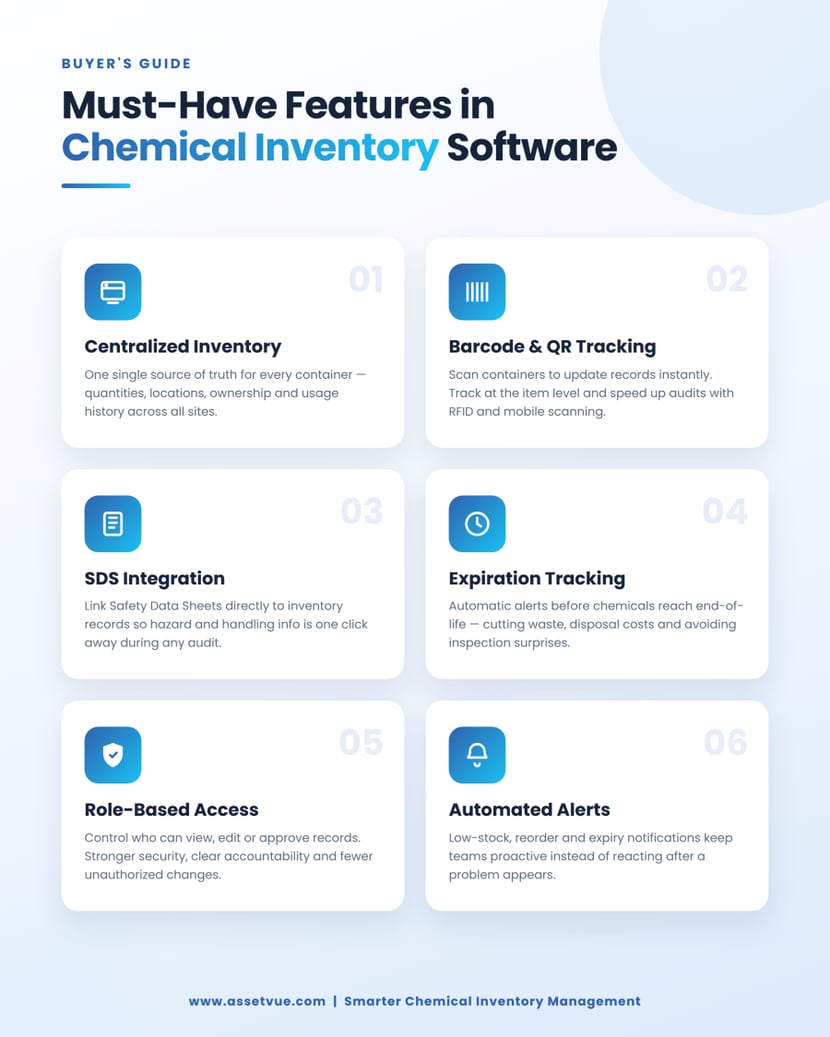
Why Chemical Inventory Management Matters
Chemical inventory management keeps a workplace safe, efficient, and compliant. Some teams run a single small lab. Others manage thousands of containers across many sites. Either way, accurate and current inventory data is essential. Without it, teams struggle to track usage, monitor storage, or spot safety risks early.
Maintaining Laboratory and Workplace Safety
Many chemicals need specific handling, storage, and disposal steps. When records are incomplete or outdated, it gets harder to store hazardous materials correctly. It also gets harder to limit access to authorized staff. Missing or wrong information raises the risk of incidents, exposure, and unsafe storage.
A well-designed Chemical Management System Software keeps detailed records for every chemical. That includes quantities, locations, storage rules, and safety information. When this data sits in one place, teams make safer decisions and reduce risk.
Supporting Regulatory Compliance
Regulatory compliance is another major reason organizations invest in chemical inventory management solutions. Agencies such as OSHA require organizations to maintain accurate hazard communication records and provide access to Safety Data Sheets (SDS) for employees handling hazardous materials.
Manual recordkeeping can make compliance efforts more challenging, especially when inventory levels frequently change. Chemical Inventory Management Software helps organizations maintain accurate records, generate reports, and access critical documentation when needed. This not only simplifies inspections and audits but also helps reduce the administrative burden associated with compliance management.
Improving Operational Efficiency
Safety and compliance matter, but efficiency does too. Many teams deal with duplicate purchasing, overstocking, expired chemicals, and unused inventory. These problems drive up costs and create waste.
Modern systems show inventory levels and usage in real time. That helps teams buy smarter and hold the right amount of stock. They can see what is available, where it sits, and when to reorder. This visibility keeps operations efficient and protects the value of every purchase. To learn more about the broader business case, see our guide on why asset lifecycle management is crucial for growing organizations.
Centralized Chemical Inventory Management Software
One of the most important features is the ability to centralize inventory data. As organizations grow, chemicals end up spread across labs, storage rooms, departments, and sites. Separate spreadsheets and disconnected tools make accurate records hard to keep. They also hide the full picture.
A centralized system gives teams one place to manage chemical information. Everyone can reach accurate, current records when they need them. This improves visibility, supports better decisions, and strengthens compliance. Asset Vue helps teams build a central repository for chemical data. From a single platform, you can track quantities, locations, usage history, and compliance documents.
Creating a Single Source of Truth
Managing chemical inventory becomes significantly easier when all information is stored in a single system. Instead of searching through multiple databases or manually updating spreadsheets, users can access detailed records for every chemical container from a centralized dashboard.
This visibility allows organizations to track quantities, storage locations, ownership, and usage history in real time. It also helps prevent common issues such as duplicate purchases, misplaced inventory, and inaccurate stock counts. For facilities managing large inventories across multiple locations, having a single source of truth ensures everyone works from the same information.
Centralized inventory management also supports greater accountability by providing clear records of inventory changes and user activity, helping organizations maintain better control over their chemical assets.
Safety Data Sheet (SDS) Integration
Easy access to Safety Data Sheets is essential for both workplace safety and regulatory compliance. Employees need immediate access to information about chemical hazards, handling procedures, storage requirements, and emergency response guidelines.
A modern Chemical Inventory Management Software solution should integrate SDS information directly into the inventory system. This allows users to quickly locate critical safety information without searching through physical binders or separate databases.
By linking inventory records with SDS documentation, organizations can improve hazard communication efforts and ensure employees have access to the information they need to work safely. This integration also simplifies compliance management by keeping safety documentation organized and readily available during inspections or audits.
Role-Based Access and User Permissions
Not every employee requires the same level of access to inventory information. Laboratories, research facilities, and industrial organizations often need to control who can view, edit, approve, or manage chemical records.
Role-based access controls help organizations establish appropriate permissions based on job responsibilities. For example, inventory managers may have full administrative access, while other users may only be authorized to view inventory data or perform inventory updates.
These controls improve security, reduce the risk of unauthorized changes, and create a more structured inventory management process. They also help organizations maintain accurate records by ensuring accountability for inventory-related activities.
Supporting Multi-Location Inventory Visibility
Many organizations manage chemical inventories across multiple buildings, laboratories, campuses, or operational sites. Without centralized visibility, it can be difficult to determine where chemicals are stored, whether inventory is available at another location, or when replenishment is actually needed.
A centralized Chemical Inventory Management Software platform provides visibility across all locations from a single interface. Teams can quickly identify inventory availability, transfer materials between facilities when appropriate, and make more informed purchasing decisions.
Organizations increasingly look for solutions that combine centralized inventory management with asset tracking capabilities, helping them maintain visibility not only into chemical inventories but also the equipment and assets used to support daily operations. This broader visibility helps improve efficiency, reduce waste, and support more effective inventory control across the organization.
Real-Time Tracking with a Chemical Inventory Barcode System
Accurate inventory data depends on knowing exactly what chemicals are available, where they are stored, and how they are being used. While spreadsheets and manual recordkeeping may work for smaller inventories, they often become difficult to manage as inventory volumes increase. Missing updates, data entry errors, and outdated records can quickly create gaps in visibility, making it harder to maintain control over chemical inventories.
This is why many organizations are turning to Chemical Inventory Tracking Software that uses barcode and mobile technologies to automate inventory management processes. By reducing manual tasks and improving data accuracy, these systems help organizations maintain more reliable inventory records while supporting safer and more efficient operations. Asset Vue's barcode and RFID-enabled inventory management capabilities help organizations maintain accurate inventory records while reducing manual data entry and inventory reconciliation efforts.
Why Manual Tracking Creates Challenges
Manual inventory processes often require employees to record inventory changes by hand and update records separately. While this approach may seem manageable at first, it becomes increasingly time-consuming and prone to error as inventories grow.
Even small inaccuracies can lead to significant challenges. Organizations may unknowingly reorder chemicals they already have in stock, struggle to locate materials when needed, or fail to identify chemicals that are approaching expiration. These issues not only increase costs but can also create safety and compliance concerns.
A modern Chemical Inventory Tracking Software solution helps eliminate many of these challenges by automating data collection and maintaining real-time inventory visibility.
Barcode and QR Code Tracking
A Chemical Inventory Barcode System provides a simple and effective way to improve inventory accuracy. By assigning a unique barcode or QR code to each chemical container, organizations can track inventory at the container level rather than relying on bulk inventory estimates.
When chemicals are received, moved, consumed, or disposed of, users can scan the associated barcode to update inventory records instantly. This reduces manual data entry and helps ensure that inventory information remains current.
Barcode-based tracking also simplifies inventory audits and reconciliations. Instead of manually verifying every item, teams can quickly scan containers and compare physical inventory against system records. This process improves efficiency while helping maintain a higher level of inventory accuracy.
Mobile Inventory Management
Today's organizations need inventory information that is accessible wherever work takes place. Mobile inventory tools allow employees to scan containers, update inventory records, and perform audits directly from laboratories, storage areas, or production environments.
With mobile-enabled Chemical Inventory Tracking Software, inventory updates can be completed in real time rather than waiting for information to be entered later. This helps reduce delays, improve data accuracy, and ensure that inventory records reflect actual conditions.
Mobile scanning also supports faster inventory counts and more efficient compliance activities. Employees can complete routine inventory tasks with less effort while maintaining accurate records throughout the organization.
Improving Visibility and Inventory Control
Real-time tracking provides organizations with a clearer understanding of inventory usage, availability, and movement. Instead of relying on periodic inventory reviews, teams can access current information whenever they need it.
This visibility helps organizations identify inventory trends, monitor usage patterns, and make more informed purchasing decisions. It also supports stronger inventory control by helping teams locate chemicals quickly and maintain accurate stock levels across facilities.
Many organizations are adopting solutions that combine barcode tracking, mobile scanning, and centralized inventory management to create a more efficient inventory process. Platforms that help real-time visibility into inventory movement reduce administrative workloads, improve accuracy, and support safer chemical management practices.
By implementing a Chemical Inventory Barcode System, organizations can move beyond manual tracking methods and establish a more reliable foundation for inventory control, compliance management, and operational efficiency.
Safety and Compliance Features Every Organization Should Prioritize
When people think about chemical inventory management, they often focus on tracking quantities and locations. While that's important, the real value comes from helping organizations create a safer and more compliant work environment.
Chemicals don't just need to be tracked—they need to be stored properly, monitored throughout their lifecycle, and managed in a way that reduces risk. The right Chemical Inventory Management Software can help organizations stay ahead of potential issues before they become costly safety or compliance problems.
Expiration Date Tracking
It's surprisingly easy for chemicals to sit unused for months or even years, especially in larger facilities where inventory is spread across multiple locations. Over time, expired chemicals can become a safety concern, create unnecessary waste, and increase disposal costs.
A strong chemical inventory system makes it easy to monitor expiration dates and receive alerts before products reach the end of their usable life. Instead of discovering expired chemicals during an audit or inspection, teams can take action early and keep inventory levels under control.
Expiration tracking also helps organizations avoid unnecessary purchases by ensuring existing inventory is used before new materials are ordered.
Storage Compatibility Monitoring
Not all chemicals can be stored together safely. Certain substances can react when placed near incompatible materials, creating risks for employees, facilities, and equipment.
This is where a modern Chemical Management System Software can make a significant difference. Advanced systems help organizations maintain accurate storage records and identify potential compatibility concerns before they become problems.
Having clear visibility into where chemicals are stored and how they are categorized helps support safer storage practices while reducing the likelihood of costly mistakes.
Automated Alerts and Notifications
Managing chemical inventory manually often means relying on spreadsheets, calendar reminders, or routine inspections to identify issues. The problem is that important details can easily be missed when teams are busy managing day-to-day operations.
Automated alerts help remove some of that uncertainty. Whether it's a low stock notification, an upcoming expiration date, or a reminder to review inventory levels, these alerts help teams stay proactive rather than reactive.
By providing timely notifications, organizations can improve inventory control, reduce waste, and avoid disruptions caused by unavailable materials.
Audit-Ready Reporting
Few teams enjoy preparing for audits. Gathering inventory records, verifying quantities, and organizing documentation can quickly become a time-consuming process when information is stored across multiple systems.
One of the biggest advantages of Chemical Inventory Management Software is the ability to maintain accurate records year-round. Instead of scrambling to collect information before an inspection, organizations can access inventory data, usage history, and compliance documentation whenever it's needed.
This not only simplifies audits but also gives managers greater confidence in the accuracy of their inventory records. When reporting becomes part of the everyday process rather than a last-minute project, compliance becomes much easier to manage.
Ultimately, the best chemical inventory systems don't just help organizations know what chemicals they have. They help create safer workplaces, support compliance efforts, and give teams the visibility they need to make informed decisions every day.
Integration Capabilities and Inventory Control
Even the best chemical inventory system can create extra work if it operates in isolation.
A common challenge for laboratories, manufacturers, and research facilities is that chemical information often lives in multiple places. Purchasing teams use one system to order chemicals, inventory managers track stock levels somewhere else, and safety teams maintain compliance records separately. As a result, employees spend valuable time moving information between systems, updating spreadsheets, and verifying data that should already be available.
The more disconnected the process becomes, the harder it is to maintain accurate inventory records.
Connecting Procurement and Inventory Management
Picture a new chemical order arriving. Someone places the order. The shipment is received. Records update, storage locations get assigned, and safety documents must reach employees. Handle these steps by hand, and mistakes can creep in anywhere.
That is why many teams want software that folds procurement into one workflow. When purchasing and inventory data connect, teams see what was ordered, what is on hand, and what to reorder. The payoff is fewer duplicate purchases and less time chasing information. You can explore how Asset Vue connects with other tools on our integrations page.
Reducing Manual Work
Most inventory problems don't start with major failures. They start with small mistakes.
A missed update. An incorrect quantity. A shipment that was received but never entered into the system.
Individually, these issues may seem minor. Over time, however, they can lead to inaccurate inventory counts, unnecessary purchases, and compliance headaches.
Integrating inventory management with procurement processes helps eliminate many of these manual touchpoints. Information flows automatically between systems, reducing the need for duplicate data entry and making inventory records more reliable.
For teams already managing hundreds or thousands of chemical containers, even small efficiency gains can have a significant impact.
Supporting Better Inventory Decisions
Having accurate data is important, but the real value comes from being able to use that data effectively.
When inventory, procurement, and usage information are connected, managers can identify purchasing trends, monitor consumption patterns, and make more informed decisions about inventory levels. Instead of relying on assumptions, they can see what chemicals are being used, how quickly inventory is moving, and where opportunities exist to reduce waste.
This level of visibility becomes especially important for larger organizations managing inventory across multiple departments or facilities.
Many organizations are moving toward integrated platforms that combine inventory tracking, barcode technology, and asset management capabilities within a single environment. By bringing this information together, teams spend less time managing data and more time focusing on safety, compliance, and operational efficiency.
Choosing the Right Chemical Asset Management Software
With so many inventory solutions on the market, it's easy to get caught up comparing features and pricing. But choosing the right Chemical Asset Management Software isn't just about finding a system that can track inventory. It's about finding a solution that fits the way your organization actually works.
A platform may look impressive during a demo, but if it's difficult to use or doesn't fit into existing workflows, adoption can quickly become a challenge. The most effective systems are often the ones that simplify daily tasks rather than adding another layer of complexity.
Look Beyond Basic Inventory Tracking
Tracking quantities and locations is important, but chemical inventory management involves much more than knowing what's on the shelf.
Teams need visibility into expiration dates, storage requirements, usage history, compliance documentation, and purchasing activity. They also need confidence that the information they're looking at is accurate and up to date.
That's why many organizations are moving away from standalone inventory tools and toward solutions that support broader inventory control and asset management processes. Having access to all of this information in one place makes it easier to manage inventory proactively rather than reacting when problems arise.
Prioritize Ease of Use
Even the most advanced software won't deliver value if employees avoid using it.
In many facilities, inventory management is only one part of a person's job. Lab managers, safety coordinators, researchers, and operations teams already have enough on their plates. If updating inventory records feels complicated or time-consuming, there's a good chance information will eventually fall behind.
A user-friendly interface, simple workflows, and mobile accessibility can make a significant difference. When employees can quickly scan a barcode, update a record, or locate a chemical without jumping through multiple screens, inventory management becomes part of the workflow instead of an extra task.
Consider Scalability from the Start
What works for a single laboratory today may not work as well a few years from now.
As organizations grow, inventories typically become larger and more complex. Additional facilities, new departments, and expanding compliance requirements can place greater demands on inventory management systems.
Choosing a solution that can scale alongside the organization helps avoid the disruption of replacing software later. Whether managing hundreds of containers or thousands across multiple locations, the system should be able to support future growth without sacrificing performance or usability.
Focus on Visibility and Control
At its core, chemical inventory management is about visibility. Teams need to know what chemicals they have, where those chemicals are located, how they are being used, and when action is required.
The best Chemical Asset Management Software provides that visibility while helping organizations improve safety, strengthen compliance efforts, and maintain better control over inventory costs.
Many organizations are finding value in platforms that combine inventory tracking, barcode technology, asset management, and real-time visibility into a single solution. This approach not only simplifies inventory management but also helps create a more connected and efficient operation overall.
Conclusion
Managing chemicals safely and efficiently requires more than a spreadsheet and periodic inventory checks. As organizations face growing compliance requirements, safety expectations, and operational demands, having the right tools in place becomes increasingly important.
The best Chemical Inventory Management Software does more than track quantities and storage locations. It helps organizations maintain accurate records, improve inventory visibility, support regulatory compliance, and reduce the risks associated with manual processes. Features such as centralized inventory management, barcode tracking, SDS integration, automated alerts, and procurement integration can make a significant difference in day-to-day operations.
When evaluating solutions, it's important to focus on both current needs and long-term goals. A system that is easy to use, scalable, and capable of providing real-time visibility can help organizations maintain better control over their chemical inventory while improving safety and efficiency across the facility.
Ultimately, effective Chemical Inventory Management is about creating a safer, more organized, and more informed workplace. By investing in the right technology, organizations can spend less time managing inventory challenges and more time focusing on the work that drives their operations forward.
Organizations seeking a scalable solution for chemical inventory management can benefit from platforms like Asset Vue, which combine inventory tracking, barcode technology, RFID asset management, and real-time visibility to help improve safety, compliance, and operational efficiency.


 FAQ
FAQ
Frequently Asked Questions
1-What is chemical inventory management?
Chemical inventory management is the process of tracking, organizing, and monitoring chemicals throughout their lifecycle. This includes recording quantities, storage locations, usage, expiration dates, and disposal activities to help improve safety, compliance, and inventory control.
2-What features should Chemical Inventory Management Software include?
At a minimum, Chemical Inventory Management Software should provide centralized inventory tracking, Safety Data Sheet (SDS) access, barcode or QR code scanning, expiration tracking, reporting capabilities, and user access controls. Many organizations also look for integration with procurement and asset management systems.
3-How does a Chemical Inventory Barcode System improve inventory accuracy?
A Chemical Inventory Barcode System allows users to scan individual containers instead of manually entering inventory data. This reduces data entry errors, speeds up inventory counts, and helps maintain more accurate inventory records across laboratories, storage rooms, and facilities.
4-What are the benefits of Chemical Inventory Tracking Software?
Chemical Inventory Tracking Software helps organizations maintain real-time visibility into chemical inventories, reduce waste, improve purchasing decisions, monitor expiration dates, and simplify compliance reporting. It also helps teams spend less time on manual inventory tasks.
5-How does Chemical Asset Management Software support compliance?
Chemical Asset Management Software helps organizations maintain detailed records of chemical inventories, storage locations, safety documentation, and inventory activity. Having this information readily available makes it easier to prepare for inspections, support regulatory requirements, and maintain audit-ready records.