Contact Us
Table of contents
Managing business assets is no longer just about purchasing equipment and using it until it needs to be replaced.
Modern organizations manage thousands of physical and IT assets across offices, warehouses, data centers, healthcare facilities, and operational sites. Without proper tracking and lifecycle visibility, businesses often struggle with missing assets, rising maintenance costs, inaccurate inventory records, and inefficient resource utilization.
This is where asset lifecycle management becomes important.
Asset lifecycle management helps organizations track and manage assets from the moment they are planned and purchased until they are retired or disposed of. Instead of treating assets as one-time purchases, businesses gain a complete view of how assets are used, maintained, monitored, and optimized throughout their lifecycle.
Today, many organizations use asset lifecycle management software, RFID tracking, barcode systems, and enterprise asset tracking software to improve visibility and maintain more accurate asset records in real time.
Let’s understand how asset lifecycle management works and why it matters for organizations managing physical and IT assets at scale.
What Is Asset Lifecycle Management (ALM)?
Asset lifecycle management, often abbreviated as ALM, is the process of managing assets throughout their lifecycle, from planning and procurement to maintenance, optimization, and final disposal.
The goal of ALM is to help organizations maintain complete visibility and control over their assets while maximizing value and minimizing operational costs over time.
Assets can include:
- laptops
- servers
- networking equipment
- warehouse tools
- machinery
- medical devices
- vehicles
- and other physical or IT assets used within the organization.
Instead of only tracking an asset's location, asset lifecycle management focuses on how the asset performs throughout its usable life.
This includes:
- When the asset was purchased
- who is using it
- maintenance history
- warranty status
- operational performance
- and when it should be replaced or retired.
Modern organizations often use asset lifecycle management solutions to centralise this information into one system.
Many businesses also combine:
- RFID tracking
- barcode scanning
- mobile asset tracking
- and enterprise asset tracking software
to automate inventory management and improve real-time asset visibility.
For example, an IT team managing hundreds of laptops across multiple offices can use asset lifecycle management software to:
- track assignments
- monitor hardware condition
- manage maintenance schedules
- and identify devices approaching end-of-life.
Similarly, warehouses and manufacturing facilities use ALM systems to monitor equipment usage, maintenance activity, and asset movement across operations.
By managing the full lifecycle of assets instead of only inventory records, organizations can make better operational, financial, and maintenance decisions over time.
Why Tracking the Asset Lifecycle Is Important
Many businesses still rely on spreadsheets or disconnected systems to manage assets.
At smaller scales, this may seem manageable. But as organizations grow, manual asset tracking often creates operational problems that become difficult to control.
Without proper lifecycle visibility, businesses may experience:
- missing assets
- duplicate purchases
- outdated inventory records
- compliance issues
- and rising maintenance costs.
Asset lifecycle management helps organizations avoid these problems by creating a structured process for tracking assets throughout every stage of their lifecycle.
One of the biggest advantages of ALM is improved visibility.
Organizations can quickly see:
- what assets they own
- where those assets are located
- who is using them
- and what condition they are in.
This visibility becomes especially important in environments where assets move frequently between departments, facilities, or employees.
Tracking the asset lifecycle also helps organizations control costs more effectively.
Without accurate lifecycle data, businesses often replace assets too early, maintain outdated equipment longer than necessary, or purchase new devices without realizing existing assets are still available.
With better lifecycle tracking, organizations can:
- optimize hardware usage
- extend asset lifespan
- reduce unnecessary purchases
- and improve long-term budgeting.
Security and compliance are also major reasons why lifecycle management matters.
Untracked or unmanaged devices can create cybersecurity risks because IT teams may not know certain hardware exists within the environment.
What Are the 5 Stages of the Asset Lifecycle?
Every asset within an organization goes through a lifecycle.
From the moment a business identifies the need for an asset until the asset is eventually retired, each stage affects operational performance, maintenance costs, and overall asset value.
Understanding these stages helps organizations manage assets more efficiently while improving visibility and long-term planning.
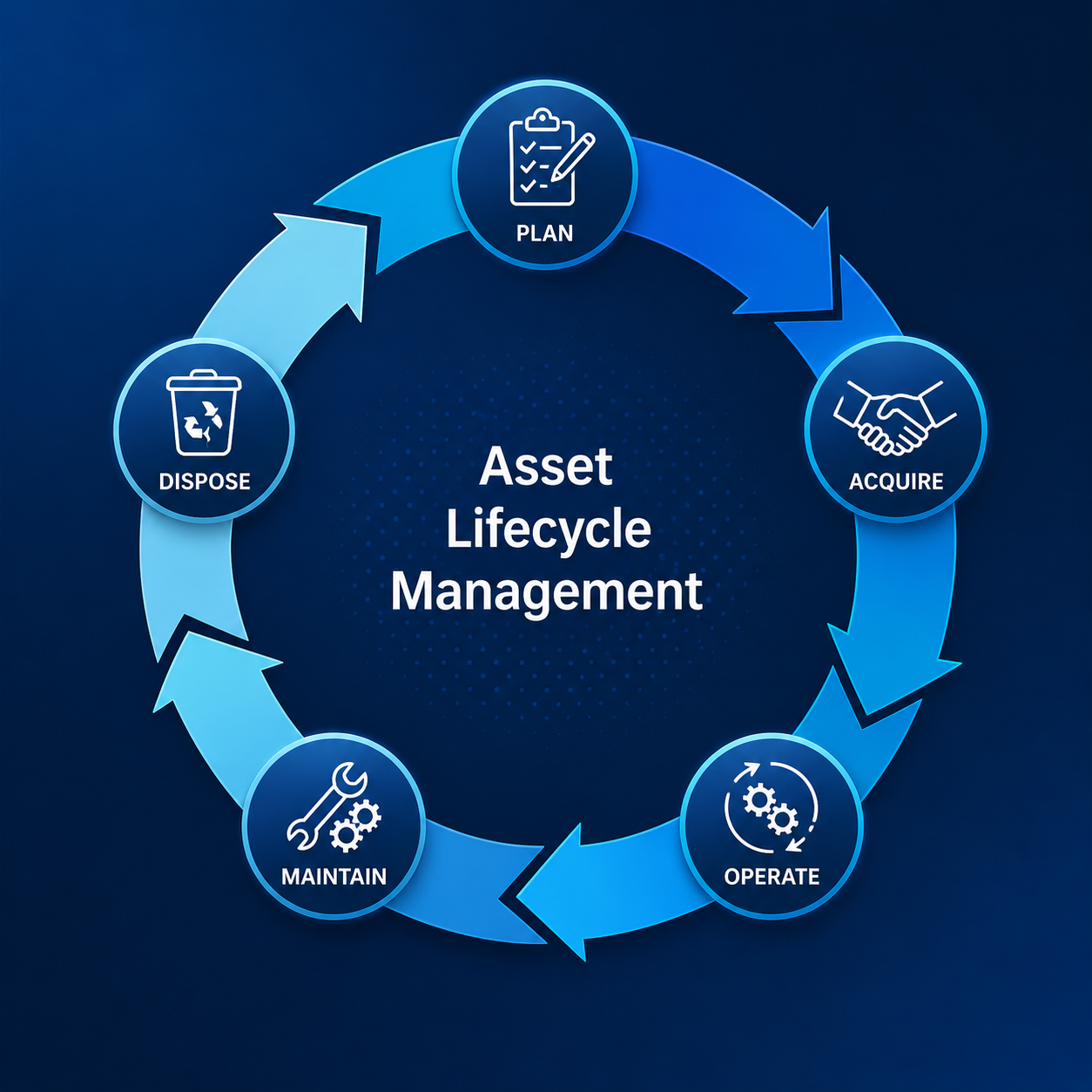
Although asset lifecycle management can vary across industries, most organizations follow five core lifecycle stages.
1. Planning & Procurement
The asset lifecycle begins with planning.
Before purchasing new equipment, organizations evaluate:
- operational needs
- budget requirements
- asset demand
- and long-term usage goals.
This stage helps businesses avoid unnecessary spending and purchase assets that align with operational requirements.
During procurement, organizations acquire assets through:
- direct purchases
- leasing
- vendor contracts
- or procurement agreements.
Accurate planning is important because poor purchasing decisions often lead to:
- underused assets
- higher maintenance costs
- and shorter asset lifespans.
Many organisations also use asset lifecycle management software during this stage to:
- record purchase details
- assign asset identifiers
- store warranty information
- and maintain centralized procurement records.
This creates a strong foundation for managing the asset throughout the rest of its lifecycle.
2. Deployment
Once assets are purchased, they move into the deployment stage.
This is where assets are:
- configured
- tagged
- assigned
- and introduced into active operations.
For IT assets, deployment may include:
- installing software
- configuring systems
- assigning devices to employees
- and connecting assets to enterprise networks.
In warehouses, healthcare facilities, or manufacturing operations, deployment may involve:
- equipment setup
- operational testing
- and asset tagging.
Many organizations use:
- barcode labels
- RFID tags
- and enterprise asset tracking software
to improve inventory visibility during deployment.
At this stage, asset records are updated with information such as:
- asset location
- assigned user
- operational status
- and deployment date.
Accurate deployment tracking helps businesses maintain better inventory control and accountability from the beginning of the asset’s operational life.
3. Maintenance & Monitoring
After deployment, assets enter the longest phase of the lifecycle: maintenance and monitoring.
This stage focuses on keeping assets operational, secure, and functioning efficiently throughout their usable life.
Organizations monitor:
- asset condition
- maintenance schedules
- performance issues
- repairs
- warranty status
- and operational usage.
For IT assets, this may include:
- software updates
- hardware repairs
- cybersecurity patching
- and device monitoring.
For industrial or operational equipment, maintenance may involve:
- inspections
- preventive servicing
- and repair management.
Without proper maintenance tracking, businesses often face:
- unexpected downtime
- reduced asset performance
- higher repair costs
- and shorter asset lifespan.
Asset lifecycle management solutions help organizations centralize maintenance records and automate alerts related to:
- warranty expiration
- service schedules
- and end-of-life timelines.
This improves long-term asset reliability while reducing operational disruptions.
4. Optimization
Optimization focuses on improving how assets are used across the organization.
Over time, businesses often discover that some assets are:
- underused
- duplicated
- outdated
- or assigned inefficiently.
Without lifecycle visibility, organizations may continue purchasing new equipment even when existing assets could be reused or reassigned.
Asset lifecycle management helps businesses identify opportunities to:
- redeploy available assets
- improve utilization
- extend equipment lifespan
- and reduce unnecessary spending.
For example, an organization may discover unused laptops in storage while another department is requesting new hardware purchases.
By improving asset visibility, businesses can make smarter operational and financial decisions based on actual inventory data instead of assumptions.
Optimization also helps organizations improve long-term planning by analyzing:
- usage trends
- maintenance costs
- asset performance
- and replacement cycles.
5. Retirement & Disposal
Eventually, every asset reaches the end of its usable lifecycle.
At this stage, organizations must properly retire, replace, recycle, or dispose of the asset.
Retirement decisions are often based on:
- performance decline
- maintenance costs
- security risks
- outdated technology
- or end-of-life support limitations.
For IT assets, retirement often includes:
- secure data wiping
- device decommissioning
- hardware recycling
- and compliance documentation.
Improper disposal can create:
- security risks
- compliance issues
- and environmental concerns.
Asset lifecycle management software helps organizations maintain records of:
- retired assets
- disposal history
- replacement timelines
- and compliance documentation.
This ensures businesses maintain accurate inventory records even after assets leave active operations.
Why Lifecycle Visibility Matters Across Every Stage
Each stage of the asset lifecycle affects:
- operational efficiency
- maintenance planning
- budgeting
- compliance
- and long-term asset performance.
Without visibility across the full lifecycle, organizations often struggle with:
- inaccurate inventory records
- rising operational costs
- unplanned downtime
- and inefficient asset usage.
Modern asset lifecycle management solutions help businesses centralize asset data, automate tracking processes, and maintain better control over assets from procurement to disposal.
As organizations continue managing larger and more complex asset environments, lifecycle visibility becomes increasingly important for improving operational control and long-term decision-making.
Benefits of Asset Lifecycle Management
Managing assets throughout their full lifecycle helps organizations improve much more than inventory tracking.
With better lifecycle visibility, businesses can reduce operational costs, improve planning, strengthen compliance, and make smarter decisions about how assets are used over time.
As organizations manage larger and more complex asset environments, asset lifecycle management becomes increasingly important for maintaining operational control and long-term efficiency.
Here are some of the biggest benefits of asset lifecycle management.
Better Asset Visibility
One of the biggest advantages of asset lifecycle management is improved visibility.
Organizations can maintain accurate records of:
- what assets they own
- where assets are located
- who is using them
- and the current condition of each asset.
This visibility helps businesses reduce missing equipment, improve accountability, and maintain more accurate inventory records across departments and locations.
Modern asset lifecycle management software also provides centralized visibility into asset movement, maintenance history, and lifecycle status for real-time asset visibility.
For organizations managing large numbers of physical or IT assets, this level of tracking becomes essential for maintaining operational control.
Lower Operational Costs
Without lifecycle management, organizations often spend more than necessary on hardware, maintenance, and replacements.
Businesses may:
- purchase duplicate equipment
- replace assets too early
- or continue maintaining outdated devices that are no longer cost-effective.
Asset lifecycle management helps organizations make better financial decisions by providing visibility into:
- asset usage
- maintenance costs
- warranty status
- and replacement timelines.
This allows businesses to:
- optimize asset usage
- extend asset lifespan
- reduce unnecessary purchases
- and improve budgeting accuracy.
Over time, these improvements can significantly reduce operational and capital expenses.
Improved Compliance & Security
Many industries must maintain strict compliance and security standards when managing physical and IT assets.
Without accurate lifecycle tracking, organizations may struggle to:
- maintain audit records
- track device ownership
- monitor asset activity
- or document proper disposal procedures.
Untracked devices can also create cybersecurity risks because IT teams may not know certain assets exist within the environment.
Asset lifecycle management software helps organizations maintain accurate records related to:
- active assets
- maintenance history
- software updates
- warranties
- and disposal activity.
This improves:
- audit readiness
- compliance reporting
- and overall infrastructure security.
For industries such as healthcare, finance, government, and enterprise IT, lifecycle visibility is especially important for maintaining operational and regulatory compliance.
Smarter Asset Utilization
Many organizations have underused or forgotten assets sitting in storage while departments continue requesting new equipment.
Without proper lifecycle visibility, businesses may not fully understand how assets are being used across operations.
Asset lifecycle management helps organizations identify:
- underutilized assets
- duplicate equipment
- and opportunities for redeployment.
For example, instead of purchasing new laptops, an organization may reassign existing devices that are no longer actively used in another department.
This helps businesses maximize the value of existing assets while reducing unnecessary spending.
Improved utilization also supports better long-term planning by helping organizations make decisions based on real operational data.
Faster Audits & Reporting
Manual audits can become time-consuming and difficult to manage as inventory grows.
Asset lifecycle management systems simplify this process by maintaining centralized and continuously updated asset records.
Many organizations also combine:
- RFID tracking
- barcode scanning
- and enterprise asset tracking software
to automate inventory management and improve audit speed.
This helps businesses:
- reduce manual workload
- improve inventory accuracy
- and generate reports more efficiently.
Faster reporting also improves collaboration between:
- IT teams
- finance departments
- operations
- and compliance teams.
As organizations continue managing larger inventories across multiple locations, automated lifecycle tracking becomes increasingly valuable for maintaining accurate and audit-ready asset records.
Types of Asset Lifecycle Management
Asset lifecycle management is used across many industries and operational environments.
Different organizations manage different types of assets, which is why lifecycle management strategies often vary depending on the asset category and business requirements.
Some businesses focus mainly on IT assets, while others manage operational equipment, facilities, or digital resources across enterprise environments.
Understanding the different types of asset lifecycle management helps organizations choose the right tools, processes, and tracking systems for their operations.
IT Asset Lifecycle Management
IT asset lifecycle management focuses on managing technology assets throughout their operational life.
This includes assets such as:
- laptops
- servers
- networking equipment
- mobile devices
- monitors
- and enterprise hardware.
Organizations use IT asset lifecycle management to:
- track hardware ownership
- monitor device health
- manage maintenance
- schedule upgrades
- and maintain accurate inventory records.
As businesses expand their IT infrastructure, managing devices manually becomes increasingly difficult.
This is why many organizations use:
- asset lifecycle management software
- RFID tracking
- barcode systems
- and enterprise asset tracking software
to improve visibility into IT assets across multiple departments and locations.
Fixed Asset Lifecycle Management
Fixed asset lifecycle management focuses on long-term physical assets that support business operations.
These assets may include:
- office furniture
- warehouse equipment
- machinery
- operational infrastructure
- and facility assets.
Organizations track these assets to maintain:
- accurate financial records
- depreciation schedules
- maintenance history
- and operational visibility.
Fixed asset lifecycle management also helps businesses:
- reduce asset loss
- improve accountability
- and optimize long-term asset usage.
Many finance and operations teams use centralized asset management systems to improve reporting accuracy and maintain audit-ready records throughout the asset lifecycle.
Digital Asset Lifecycle Management
Digital asset lifecycle management focuses on non-physical assets such as:
- software licenses
- digital documents
- media files
- cloud resources
- and enterprise software assets.
Organizations use digital lifecycle management to:
- maintain software compliance
- manage license renewals
- monitor digital asset usage
- and improve data organisation.
As businesses continue moving toward cloud-based operations, managing digital assets has become increasingly important for maintaining operational control and reducing unnecessary software costs.
Digital lifecycle management also helps organisations improve:
- access control
- version management
- and software utilisation visibility.
Industrial & Enterprise Asset Lifecycle Management
Industrial and enterprise asset lifecycle management focuses on operational equipment used in:
- manufacturing
- logistics
- warehousing
- healthcare
- and enterprise facilities.
These environments often manage:
- production machinery
- tools
- scanners
- medical devices
- forklifts
- and large operational equipment.
Organizations use lifecycle management systems to monitor:
- maintenance activity
- equipment performance
- operational downtime
- and asset utilization
Many businesses in these industries also use:
- RFID tracking
- real-time asset visibility
- and automated inventory systems
to improve operational control and reduce equipment-related disruptions.
Because these assets are often critical to daily operations, lifecycle visibility helps organizations reduce downtime while improving maintenance planning and long-term asset performance.
Why Different Lifecycle Management Types Matter
Every organization manages assets differently.
An enterprise IT team may focus heavily on hardware visibility and cybersecurity, while a warehouse operation may prioritize equipment tracking and inventory movement.
Understanding the different types of asset lifecycle management helps businesses:
- choose the right tracking systems
- improve operational visibility
- reduce costs
- and maintain better control over assets throughout their lifecycle.
As organizations continue managing larger and more complex asset environments, lifecycle management systems are becoming essential for maintaining visibility, accountability, and operational efficiency across both physical and digital assets.
How Asset Lifecycle Management Software Helps Organizations
Managing assets manually becomes increasingly difficult as organizations grow.
Spreadsheets, disconnected systems, and manual inventory tracking often lead to:
- inaccurate records
- missing assets
- delayed maintenance
- and poor visibility into asset usage.
Asset lifecycle management software helps solve these challenges by centralizing asset data and automating lifecycle tracking across the organization.
Instead of managing assets through separate tools or manual processes, businesses can monitor the full lifecycle of assets within a single system.
Modern asset lifecycle management solutions help organizations:
- track asset ownership
- monitor maintenance history
- manage warranties
- automate inventory updates
- and maintain real-time visibility into physical and IT assets.
Many businesses also combine:
- RFID tracking
- barcode scanning
- mobile asset management
- and enterprise asset tracking software
to improve inventory accuracy and simplify operational workflows.
For example, organizations can quickly:
- locate assets
- identify underused equipment
- monitor lifecycle status
- and generate audit-ready reports without relying heavily on manual inventory checks.
Automation also improves maintenance planning by helping businesses track:
- service schedules
- warranty expiration dates
- equipment performance
- and end-of-life timelines.
This helps organizations reduce unexpected downtime while improving long-term asset reliability.
Another major advantage of asset lifecycle management software is centralized visibility.
IT, finance, operations, and compliance teams can all access consistent asset data from one platform, improving coordination across departments.
As organizations continue managing larger and more distributed asset environments, centralized lifecycle tracking helps businesses maintain better operational control while reducing manual workload and inventory-related risks.
How Asset Vue Supports Asset Lifecycle Management
Modern organizations need more than basic inventory tracking.
As businesses manage growing IT infrastructures and operational environments, they need systems that provide:
- real-time asset visibility
- lifecycle tracking
- inventory accuracy
- and centralized asset management.
Asset Vue provides RFID-powered asset tracking and asset lifecycle management solutions that help organizations manage physical and IT assets more efficiently throughout the asset lifecycle.
Their solutions support:
- hardware asset management
- RFID inventory management
- enterprise asset tracking
- and real-time asset visibility across large operational environments.
By combining:
- RFID technology
- asset management software
- mobile scanning
- and centralized reporting
Organizations can automate inventory tracking while improving visibility into asset movement, maintenance activity, and lifecycle status.
Asset Vue solutions are commonly used across industries such as:
- enterprise IT
- warehousing & logistics
- healthcare
- manufacturing
- and data centers where accurate asset visibility is critical.
For organizations managing large numbers of physical and IT assets, centralized lifecycle visibility helps improve operational control while reducing manual inventory processes and asset-related inefficiencies.
Conclusion
Asset lifecycle management helps organizations gain better visibility and control over physical and IT assets from procurement to disposal.
Instead of only tracking inventory, businesses can monitor how assets are used, maintained, optimized, and retired throughout their operational life.
With the help of asset lifecycle management software, organizations can:
- improve asset visibility
- reduce operational costs
- strengthen compliance
- optimize asset usage
- and maintain more accurate inventory records.
As businesses continue managing larger and more complex asset environments, lifecycle visibility is becoming increasingly important for maintaining operational efficiency and long-term asset performance.
Modern technologies such as:
- RFID tracking
- barcode systems
- mobile asset management
- and enterprise asset tracking software
are helping organizations automate lifecycle tracking while improving real-time visibility across operations.
For organizations looking to improve operational control and asset management at scale, asset lifecycle management is no longer optional. It has become an essential part of modern business operations.


 FAQ
FAQ
Frequently Asked Questions
What is Asset Lifecycle Management?
Asset lifecycle management (ALM) is the process of managing assets throughout their entire lifecycle, from planning and procurement to maintenance, optimization, and disposal.It helps organizations maintain visibility into:asset location,usage,maintenance history,performance,and lifecycle status.
What are the 5 stages of Asset Lifecycle Management?
The five main stages of asset lifecycle management are: Planning & Procurement, Deployment, Maintenance & Monitoring, Optimisation, Retirement & Disposal. Each stage helps organisations manage assets more efficiently throughout their operational life.
Why is Asset Lifecycle Management important?
Asset lifecycle management helps organizations:improve asset visibility,reduce operational costs,optimize asset usage,strengthen compliance,and maintain accurate inventory records.It also helps businesses make better long-term decisions about maintenance, upgrades, and asset replacement.
What is the difference between ALM and PLM?
ALM stands for Asset Lifecycle Management, while PLM stands for Product Lifecycle Management.ALM focuses on managing physical and IT assets after organizations purchase and use them internally.PLM focuses on managing the lifecycle of a product from design and development to manufacturing and market release.In simple terms:ALM manages business-owned assets,while PLM manages products created and sold by a company.
How does Asset Lifecycle Management software help businesses?
Asset lifecycle management software helps organizations centralize asset data and automate lifecycle tracking. Businesses can use the software to: track asset ownership, monitor maintenance, manage warranties, improve inventory visibility, and generate audit-ready reports. Many organisations also combine RFID tracking and barcode systems with lifecycle management software to improve real-time asset visibility and inventory accuracy.